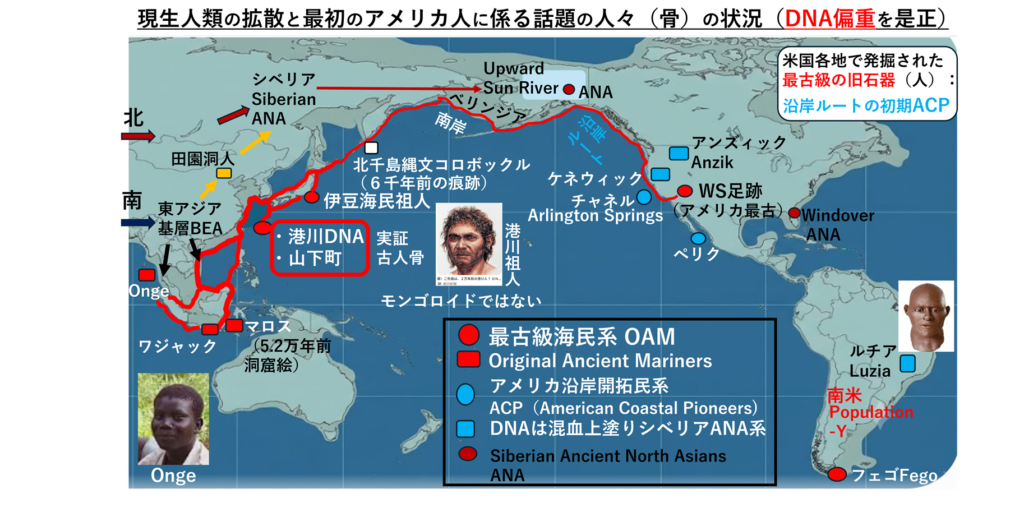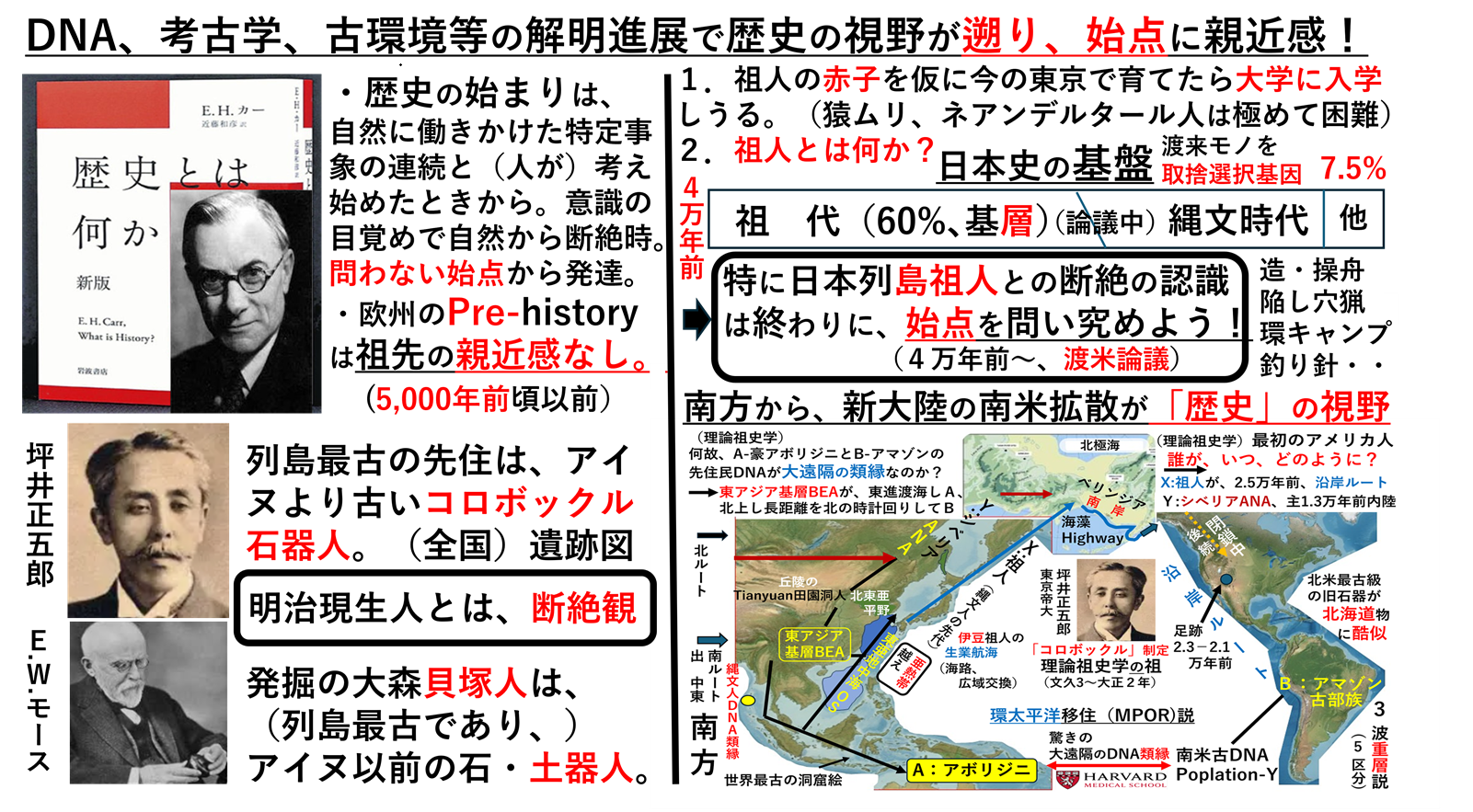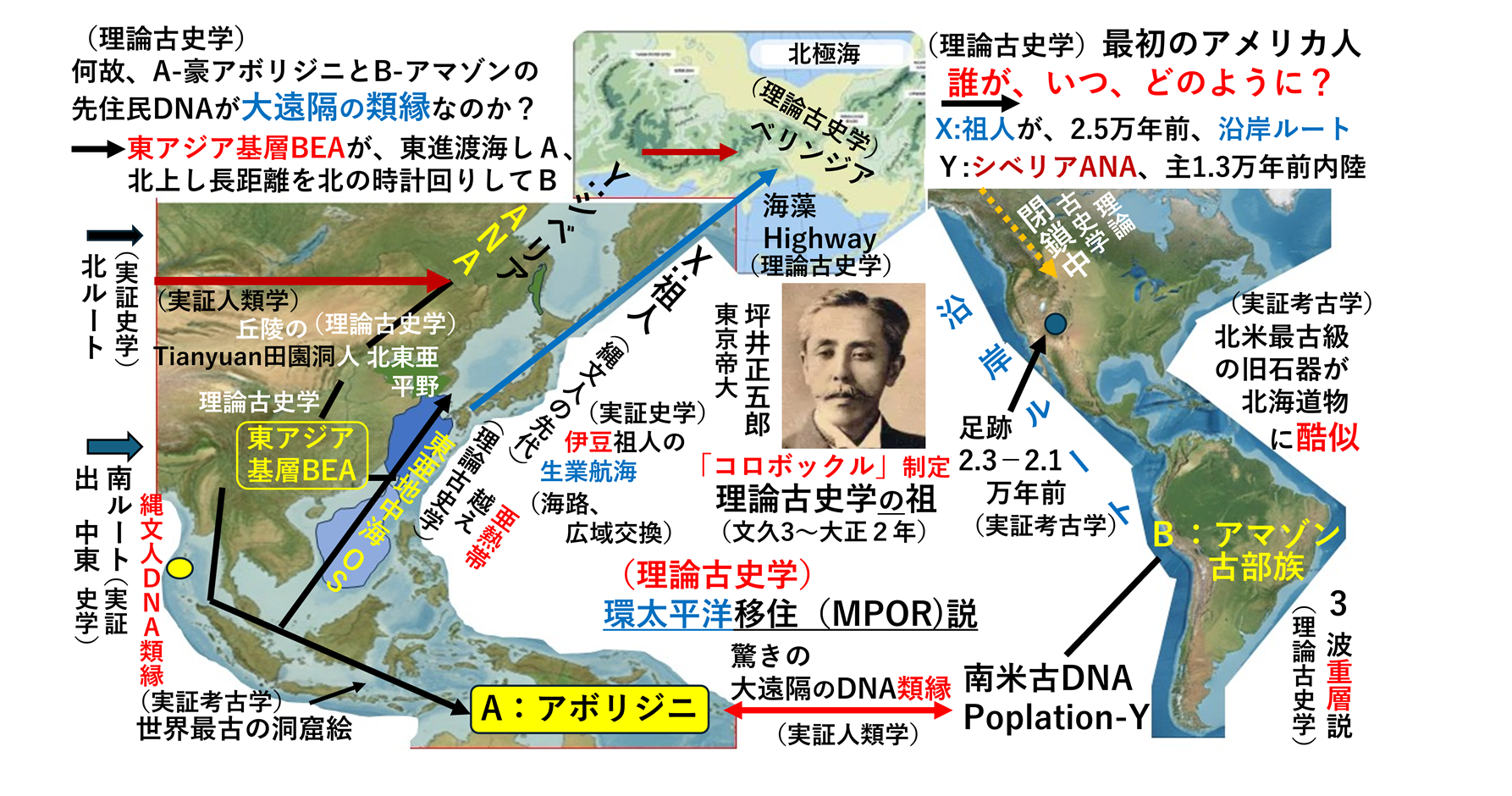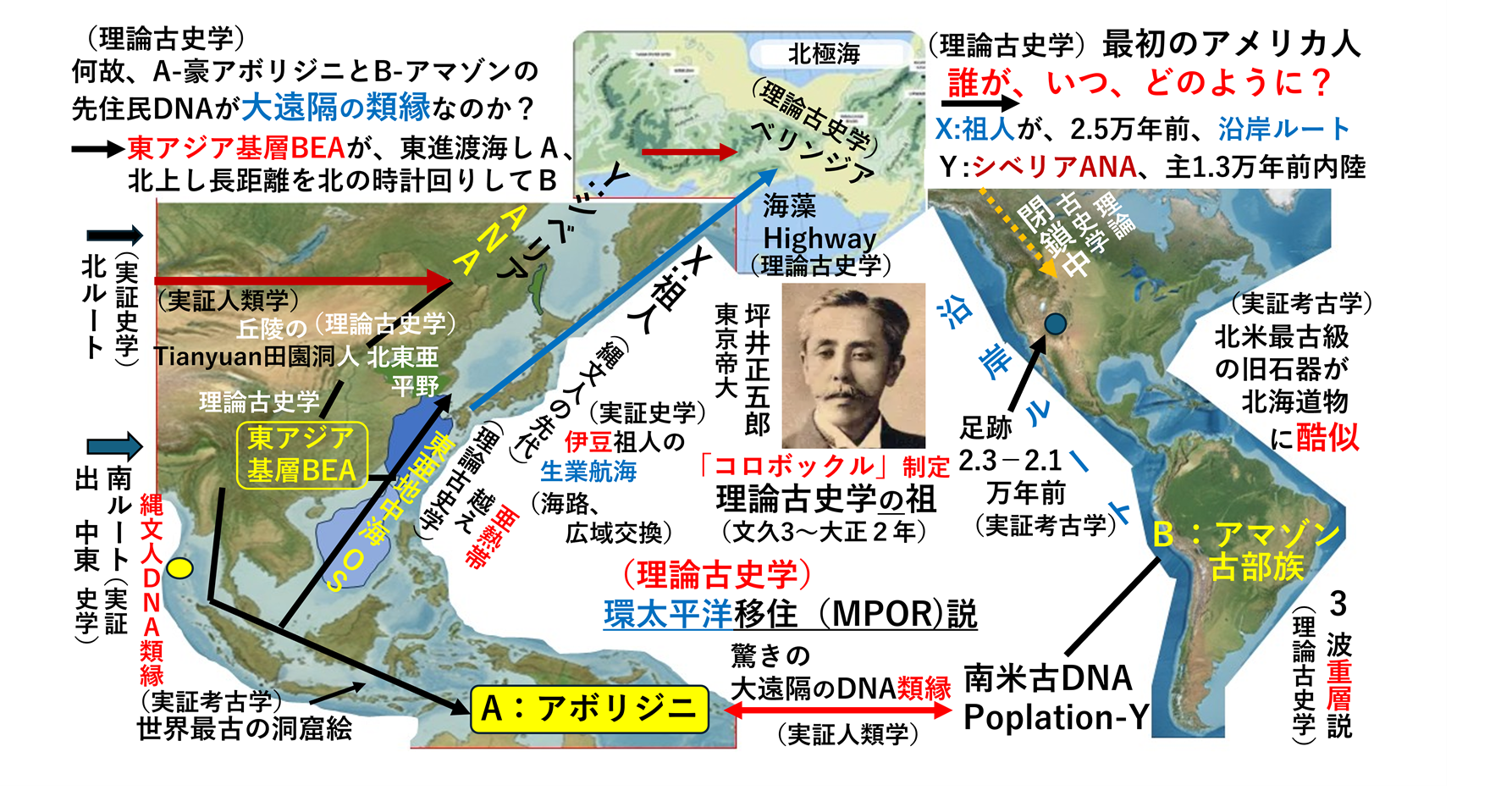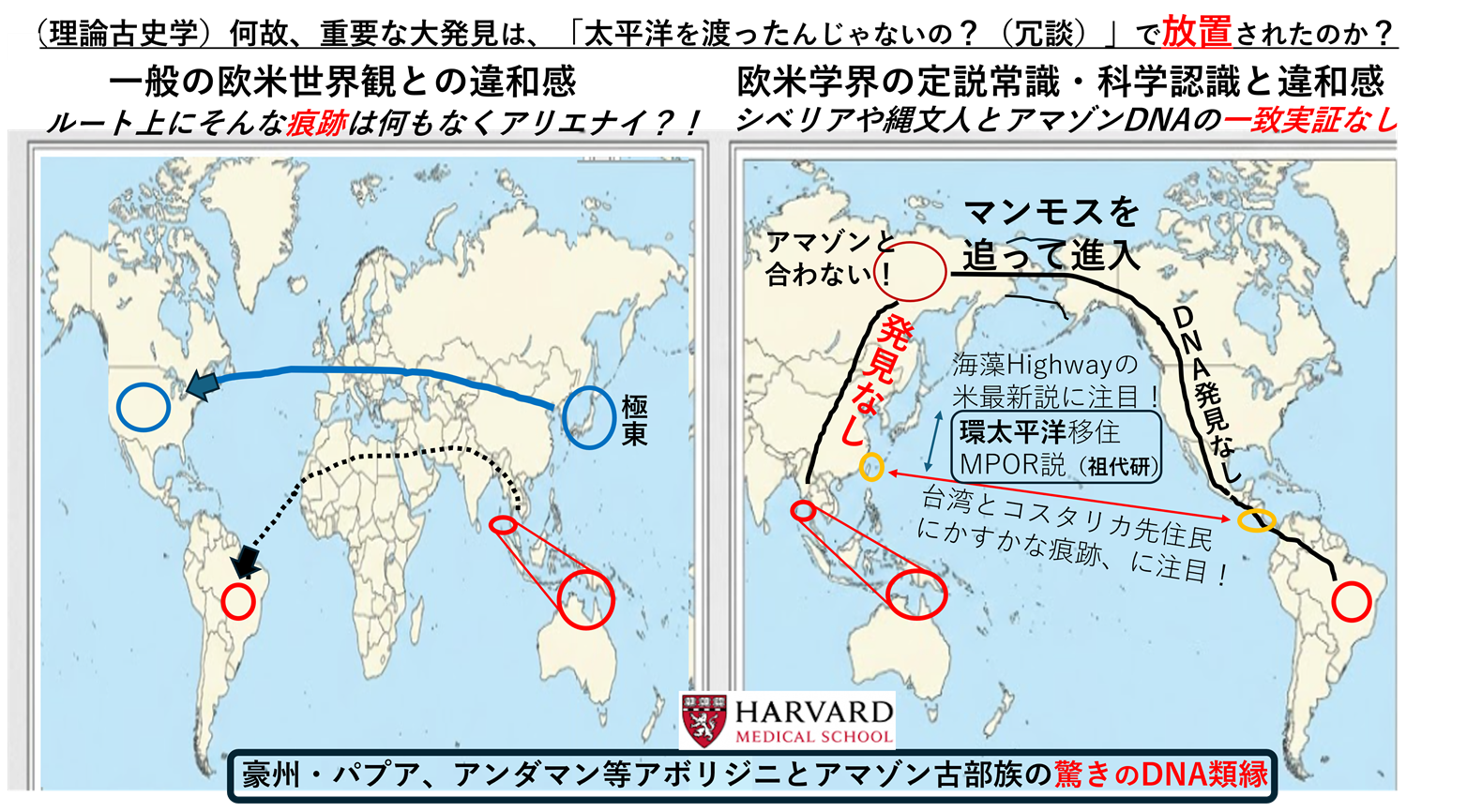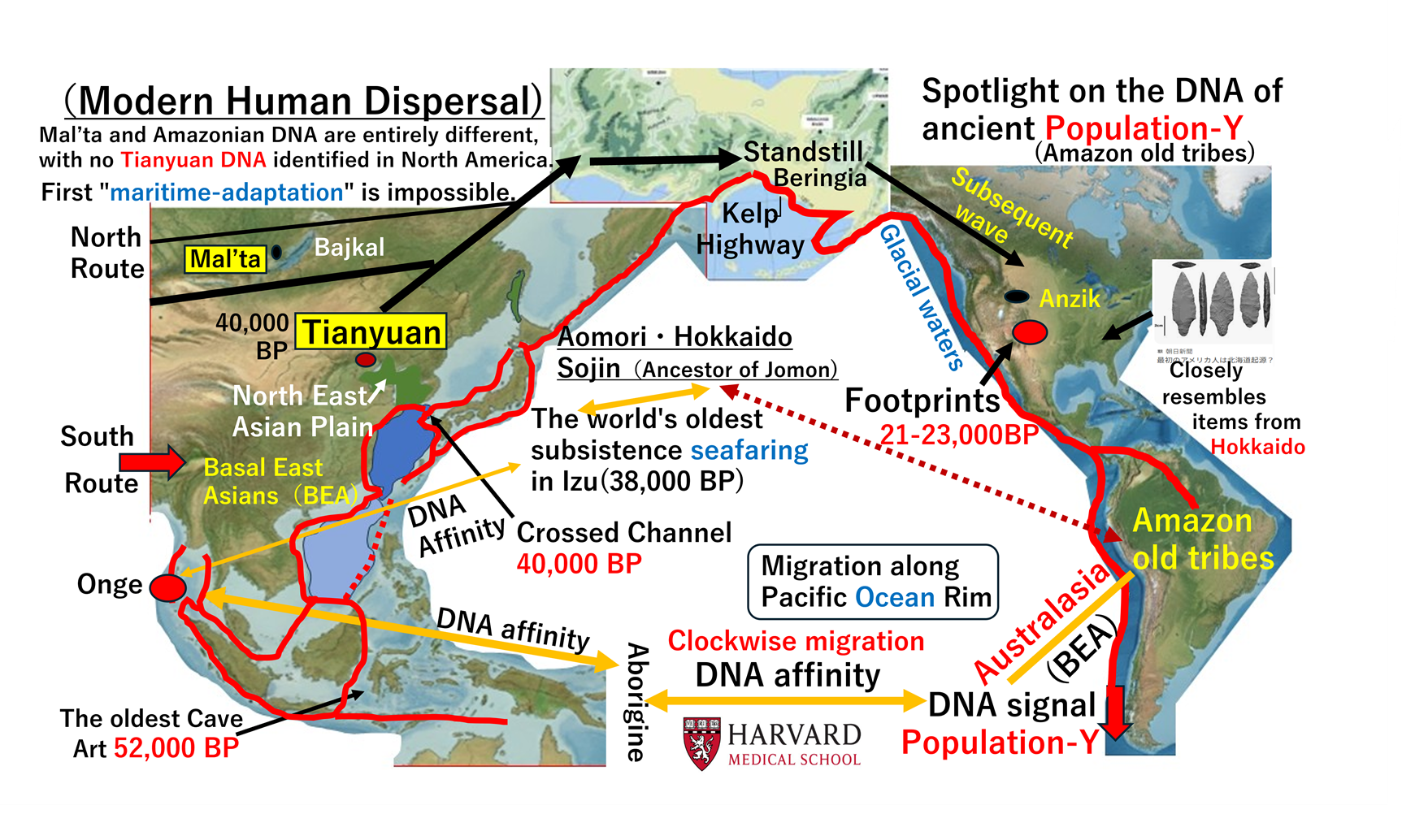
近年、古代DNA(ゲノム)解析技術の飛躍的進歩により、アメリカ新大陸の定住史は一見クリアに解明されたかのように語られています。しかし、現在の欧米学界を席巻する「DNA至上主義(ゲノム偏重主義)」は、重大なアポリア(自己矛盾)を孕んでいます。
彼らは、ある古人骨から「シベリア・内陸起源(ANA系)」の遺伝特徴が検出されると、その人物の身体的形質(骨格)や生業技術(航海OS)がどれほど南方・海洋的(始源の古代海洋民OAM/アメリカ沿岸開拓者ACP系)であっても、短絡的に「内陸ルートの移動民」として一括りにしてしまう傾向があります。これにより、LGM(最終氷期極大期)に確実に存在した「アメリカ沿岸開拓者(ACP)」の動態が、歴史の闇に葬り去られようとしています。
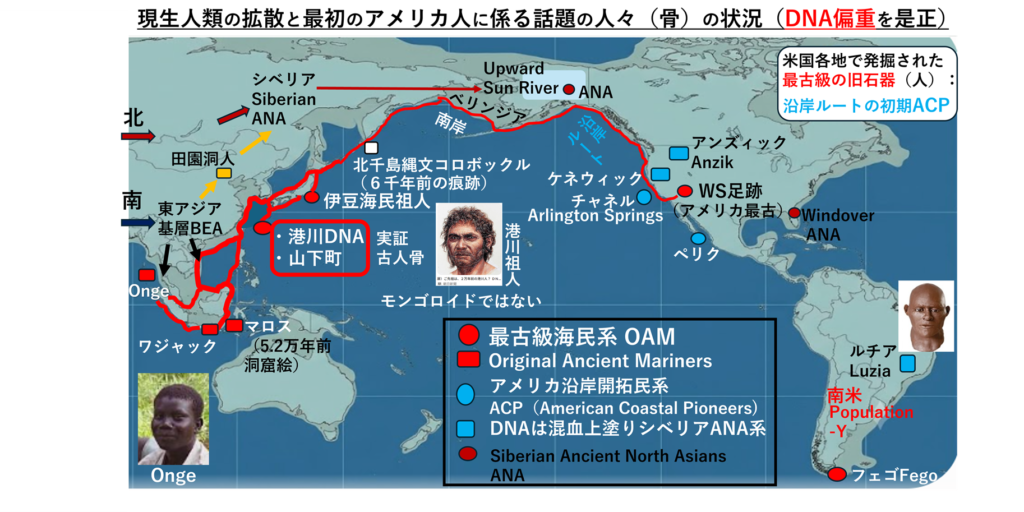
本レポートでは、「OAM」「ACP」「ANA系」の3つの動態(ダイナミクス)軸を導入し、環太平洋の主要な古人骨を再マッピングすることで、学界の「DNA偏重」が招いた誤解を解き明かします。
Ⅰ. 三大系統(OAM / FACP / ANA)の定義とダイナミクス
新大陸の最初期の歴史を紐解くには、単なる「遺伝子のラベル」ではなく、「身体の形質」と、過酷な氷塊漂う環境を生き抜いた「技術(OS:オペレーティングシステム)」の2つの指標を組み合わせる必要があります。
【スンダランド〜日本列島「発射台」】 │(日本人はどこから?)
▼
1. OAM(始源の海洋民):3.8万〜2.2万年前、世界最古の航海OSと古M系統を保持 │
▼(LGM期:北米内陸の無氷回廊閉鎖期に海藻ケルプ・ハイウェイを最速南下)
2. ACP(沿岸開拓パイオニア):ホワイトサンズに足跡を刻み、南米へ到達 │
▲(LGM以降、無氷回廊開通により怒涛の南下)
3. 純正ANA(内陸の狩猟民):寒冷適応したモンゴロイドを含み、数で沿岸民を圧倒
(古人骨・足跡の「三系統分類」の特性)
1. OAM(Original Ancient Mariners / 始源の古代海洋民)
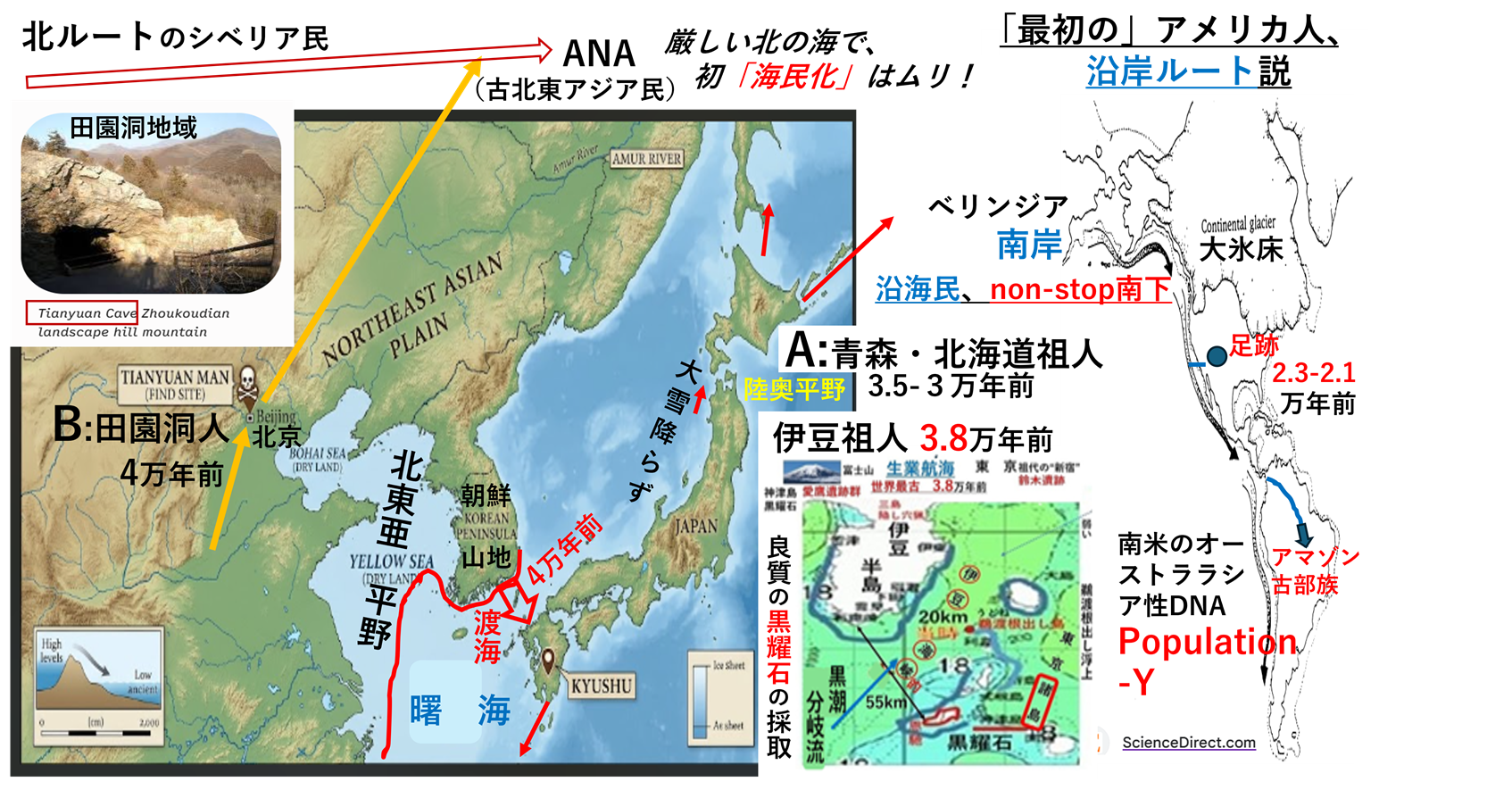
- 地理的起源: スンダランド沿岸から日本列島(曙海、南西諸島、伊豆・東京諸島、陸奥平野)
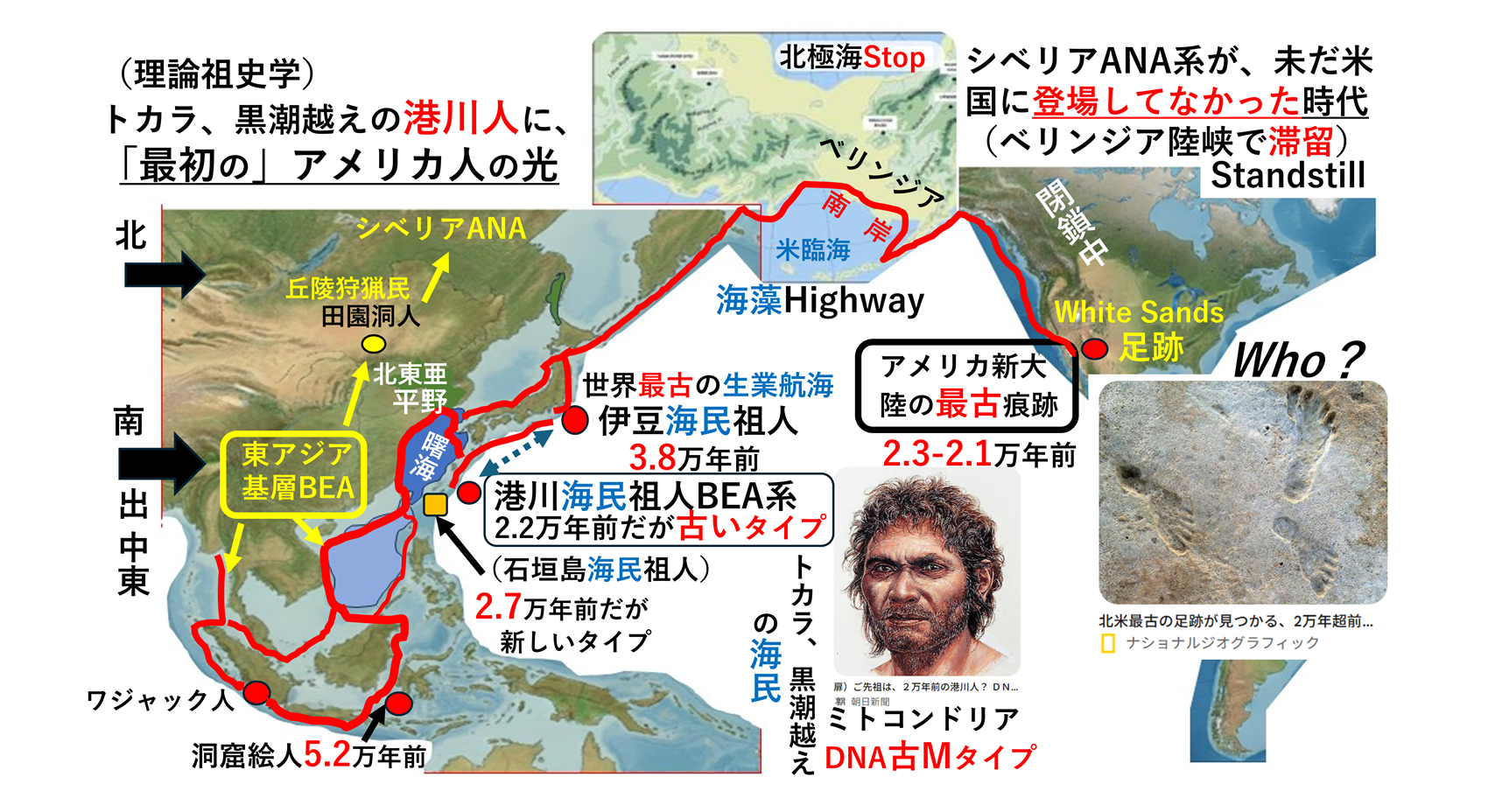
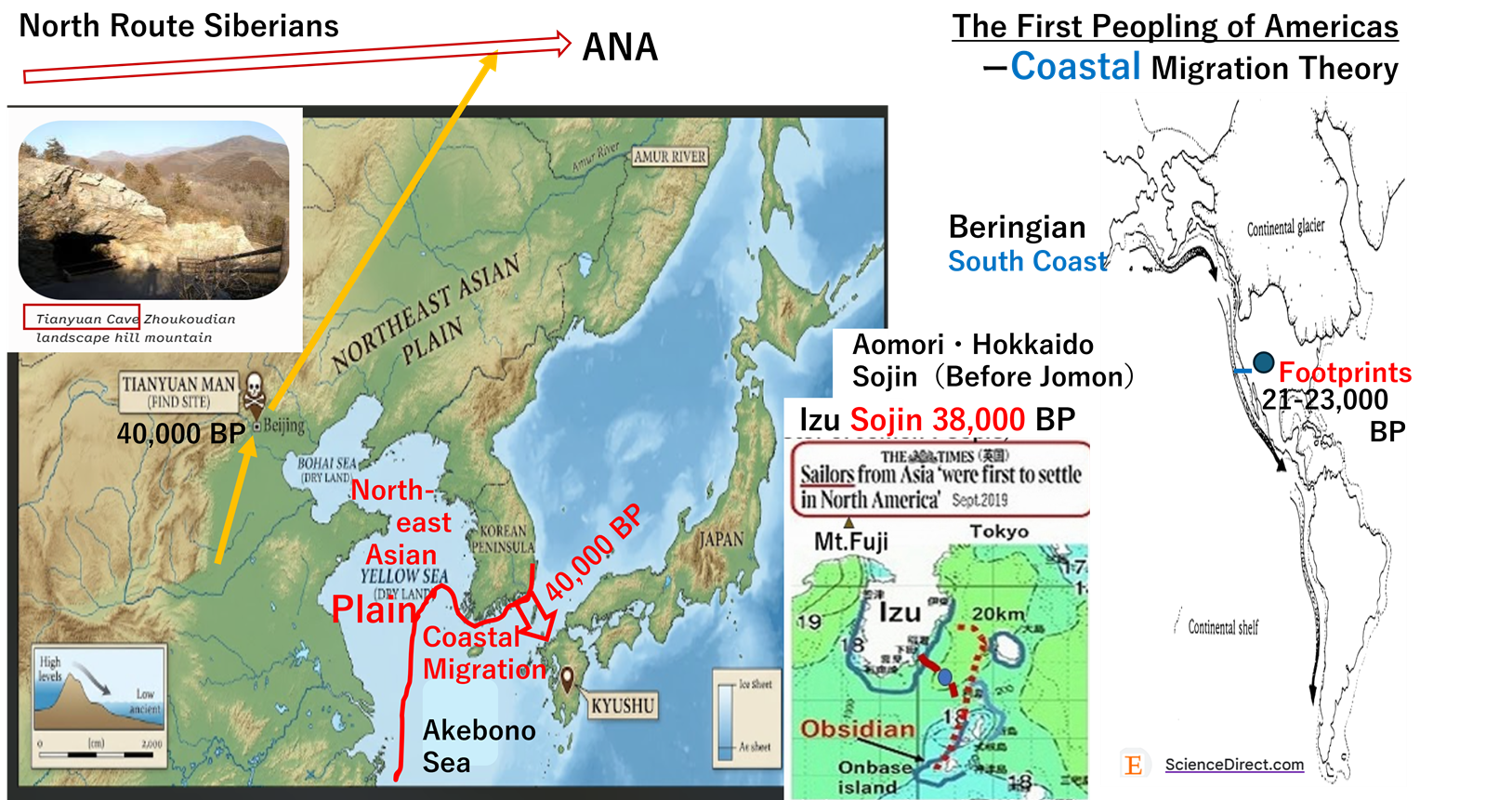
- 特徴・OS(暮らしの基本ソフト): 曙海の北上で育まれた「多島海OS(列島ホッピングの多様な沿岸暮らし、潮流と天体の計算・造操の舟艇技術)」をトカラ・黒潮越えや3.8万年前からの伊豆の世界最古の生業航海などで示した
- 形質・遺伝: 頑健な古東アジア・南方海洋民の形質(非モンゴロイド的)。ハプログループM(の古い基底系統、あるいはM7aの親系統)およびD4h3aの祖先型を保持。
2. ACP(American Coastal Pioneers / アメリカ沿岸開拓者)
- 地理的起源: 日本列島を「発射台」として北太平洋〜アメリカ西海岸・中南米沿岸
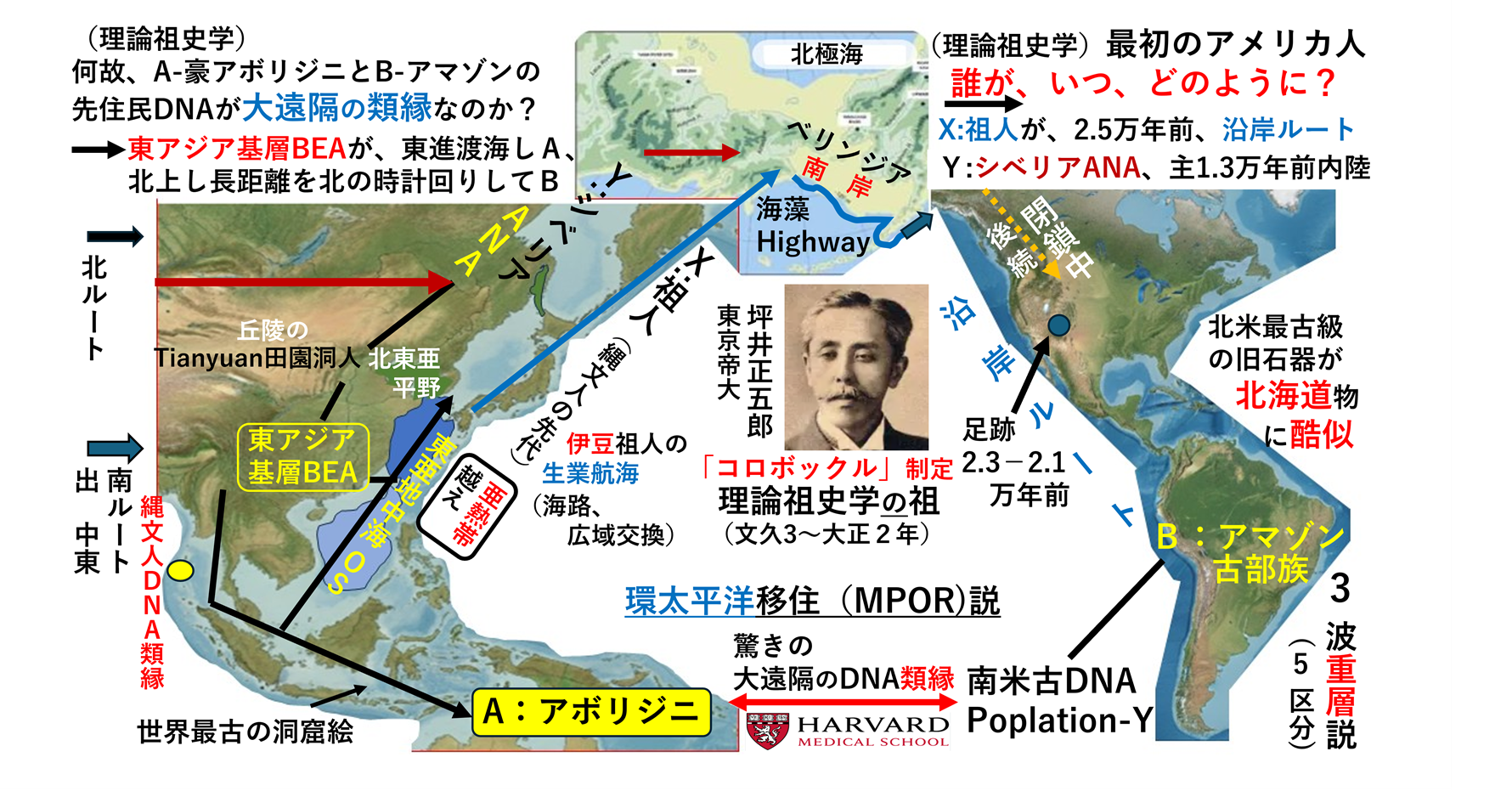
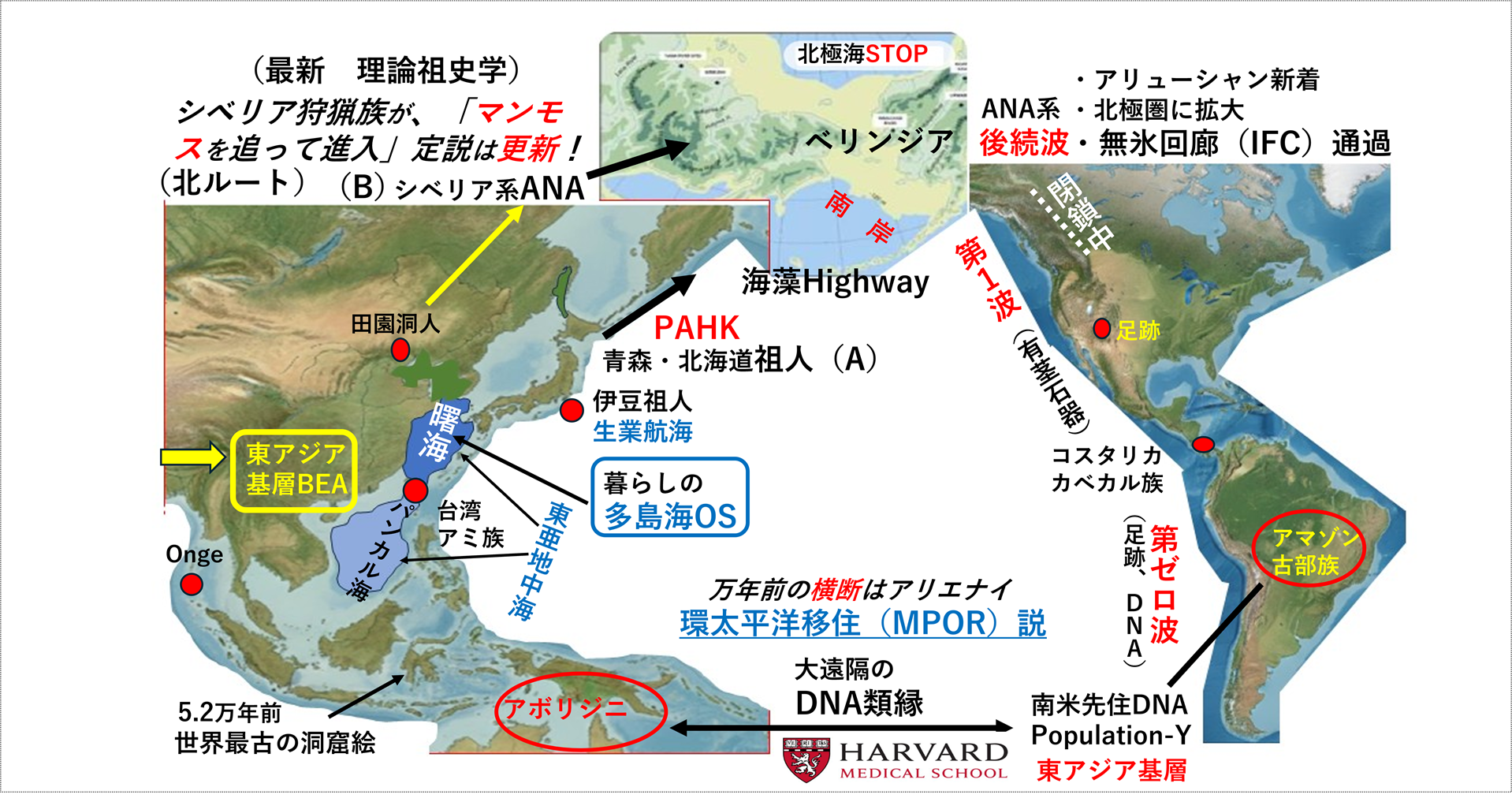
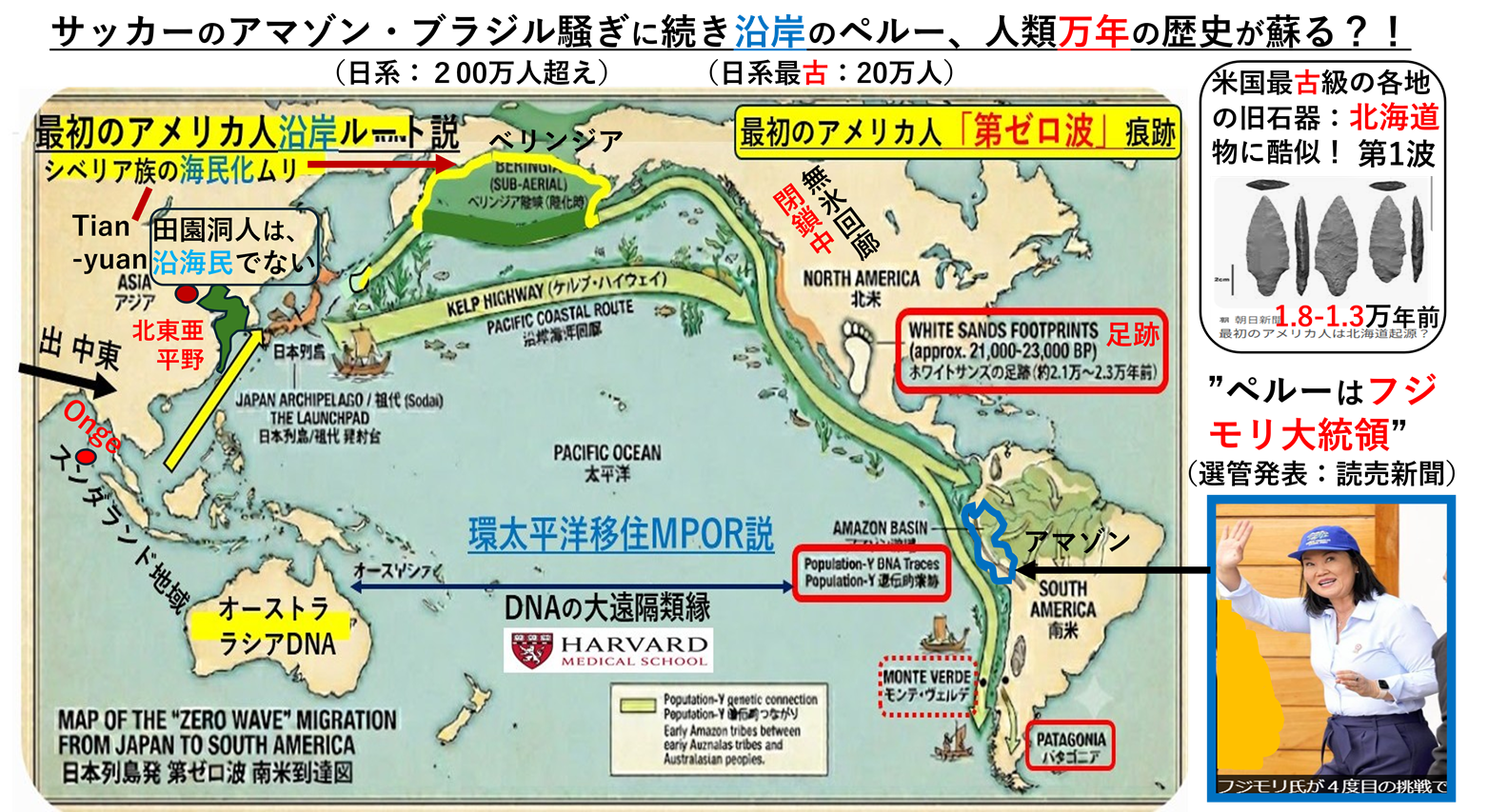
- 特徴・OS: LGM期(2.5万〜2万年前)に「無氷回廊」が氷河で閉鎖される中、結氷しない北太平洋沿岸の「ケルプ・ハイウェイ(藻場の道)」を舟でバイパスし、最速で南下した実動部隊。米国各地の最古級の有茎石器が示す。
- 形質・遺伝: OAMの遺伝基盤と航海OSをそのまま引き継ぐが、後世に進むにつれて、後続のANA系との混血(アメリンド化)が進む。
3. ANA(Ancestral North Asians / シベリア・内陸起源民)
- 地理的起源: シベリア内陸(北京郊外の田園洞含む)からベリンジア(東部アラスカ)
- 特徴・OS: 氷河期シベリアの極限草原の環境で培われた「内陸狩猟OS(マンモスハンター等の大型哺乳類追尾技術)」。細石刃技術が特徴だが、海洋・外洋航海技術は持たない。
- 形質・遺伝: 極度な寒冷適応を経た平坦な顔立ち(モンゴロイド)。ハプログループA、B、C、D(沿岸系のD4h3aを除く)といった、現代アメリカ先住民のマジョリティ(主流派)を形成する遺伝子。純正シベリア民は、南米のDNAシグナルPopulation‐Yとは全く不適合。
Ⅱ. 古人骨・足跡の「三系統分類」マトリクス
欧米学界がDNA解析の一面的なデータで混同している重要人骨群を、この3分類のダイナミクスに再配置します。
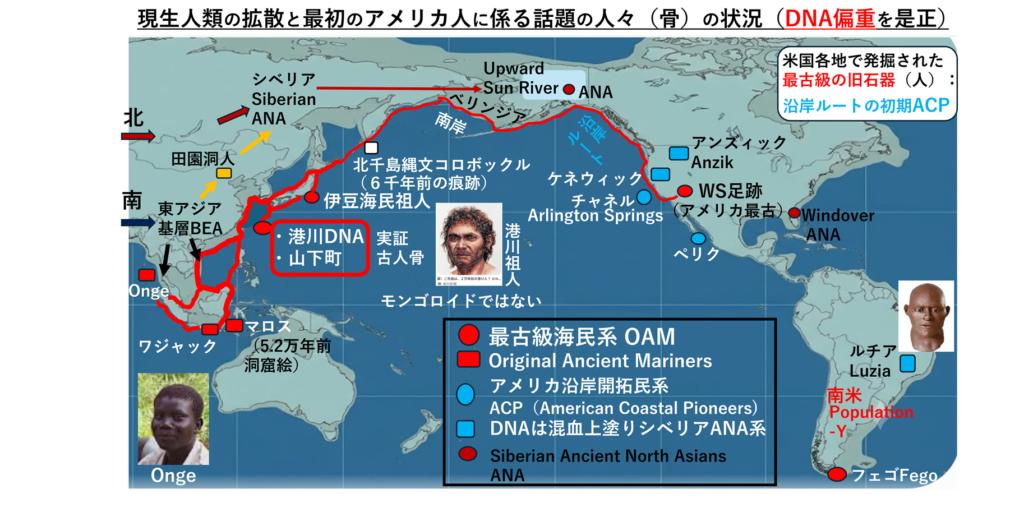
1. OAM(始源の古代海洋民)
アメリカ大陸に到達する前、アジア東縁・日本列島で多島海OSと遺伝子を熟成させた「発射台」の民。
- 伊豆祖人(伊豆諸島/3.8万年前〜):
- 位置づけ: 【OAMの航海技術的ルーツ】
- 検証: 人骨自体は強酸性土壌のため未発見だが、神津島黒耀石を求めた往復数十キロの外洋航海(約20kmの列島ホッピング)は、世界最古の計画的航海OSの証拠。彼らが太平洋を駆け抜けたエンジンの生みの親である。始原性からの類縁が推定される。
- 山下町第一洞人(沖縄県山下町/3.6万年前):
- 位置づけ: 【最古の南方系OAM骨格】
- 検証: 国内最古級の全身骨。広大な曙海(あけぼのかい)周辺から南西諸島を活発に移動していた、初期海洋適応民の肉体そのもの。その始原性から、伊豆・港川祖人と同系が推定される。
- 港川人(沖縄県八重瀬町/2.2万年前):
位置づけ: 【OAMの遺伝的・形態的始祖】検証: 基底的なmt-M系統を保持。形態的にオーストラリア先住民や後述のワジャック人に近く、シベリア適応(平坦化)前の頑健な形質を持つ。LGM期に渡米した「最古系統(Who)」に最も近い物理的特徴。
検証: 基底的なmt-M系統を保持。形態的にオーストラリア先住民や後述のワジャック人に近く、シベリア適応(平坦化)前の頑健な形質を持つ。LGM期に渡米した「最古系統(Who)」に最も近い物理的特徴。
(参考)
白保竿根田原洞人(沖縄県石垣島/2.7万年前):
位置づけ: 【OAMの母系遺伝的実証】検証: mtDNAから「M7a」を直接検出。離島である石垣島に定住していたことから、完全に海と共生していた純粋なアジア東進海洋民。 - ワジャック人(ジャワ島/約1万〜5万年前)& スラウェシ・マロスの洞窟絵人(スラウェシ島/約5.2万年前):
- 位置づけ: 【OAMの南方起源地、地域の最古級の痕跡】
- 検証: スンダランドから北・東進を開始した海洋民の祖型。港川人や後世のルチアへと連なる、立体的かつ頑健な古東アジア基層BEA人(南方系の源流)。
2. ACP(アメリカ沿岸開拓者)
OAMの航海OSをもって氷河の関所(無氷回廊閉鎖)をバイパスし、新大陸に最古の足跡を残した人々、およびその血脈を受け継ぐ人々。
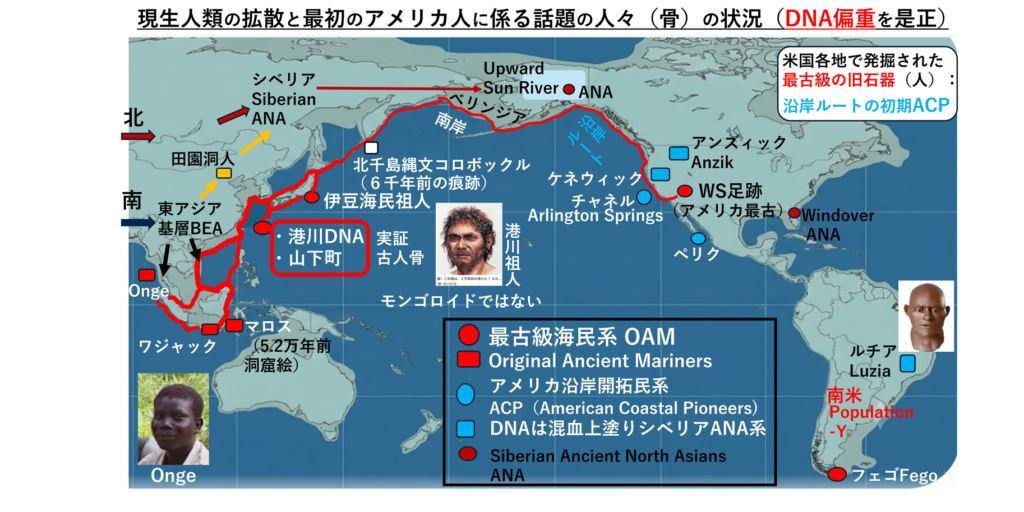
- ホワイトサンズWSの足跡(ニューメキシコ州/2.3万〜2.1万年前):
- 位置づけ: 【FirstACPの活動を示す最古の直接証拠】
- 検証: LGMの極限期、内陸ルート(無氷回廊)が閉ざされていた時代に、ニューメキシコWhite Sands に刻まれた足跡。シベリアANA系がベリンジアで足止め(Standstill)されている間に、太平洋岸を舟で一気に南下したFACPの存在を物理的に実証する。
- バハ・カリフォルニア古人骨(ペリクー族など/数千年前〜歴史時代):
- 位置づけ: 【ACPの遺伝的・形態的デッドエンド(隔離残存)】
- 検証: アメリカ西海岸の最南端「袋小路」において、後続のシベリア系ANA集団からの遺伝的流入を免れたため、OAMに極めて類似した超長頭(細長い頭蓋骨)と、高度な海洋適応生活(航海OS)を後世まで奇跡的に保存していて、周辺との人と海洋の暮らしぶりが全く異なるためにコロンブス後の欧州人を驚かせた。
- ルチア(ブラジル・ラゴア・サンタ/約1.15万年前):
- 位置づけ: 【FACPの形態的末裔(初期混血個体)】
- 検証: 学界はDNA解析から「ANA系(共通アメリンド)」と断定し「ルチアはアボリジニ系ではない」と結論づけたが、これは誤解の最たるもの。彼女の骨格が示す極めて南方的な(港川人やワジャック人に類似する)頑健形質は、ゲノム(DNA)が後続のANA系に塗り替えられつつも、FACPの肉体的特徴が強烈に残存していたことを示している。
- Anzick-1(モンタナ州/約12,600年前):
- 位置づけ: 【遺伝的ANA ✕ 母系FACPの初期混血】
- 検証: 無氷回廊の南出口で発見されたが沿岸系を遺す学界認識を正すべき好例。核ゲノムはANA系だが、mtDNAハプログループは太平洋沿岸ルートの指標である「D4h3a」。内陸のANA系と、沿岸を切り拓いたFACPが新大陸内部で合流・混血した生々しい証拠。
- ケネウィック・マン(ワシントン州/約9,000年前):
- 位置づけ: 【ANA化したFACPのラスト・ナビゲーター】
- 検証: ゲノムは先住民(ANA系)に近い。しかし、形態的にはポリネシア・アイヌに近く、安定同位体比は「ほぼ100%海洋生物のみを食べて生きていた」ことを示す。遺伝子がANA化してもなお、OAM/FACPの「航海OSと身体形質」を北米西海岸に留めていた学界認識を正すべき好例の存在。
- アリントン・スプリングス人(カリフォルニア州チャンネル諸島/約13,000年前):
- 位置づけ: 【FACPの舟艇技術の直接証明】
- 検証: 陸地から切り離されたチャネル離島で発見された北米最古級の人骨。LGM直後に、すでに高度な外洋舟艇技術を用いて島嶼生活を送っていた、紛れもないFACPの直接的痕跡。
3. ANA(シベリア・内陸起源民)
無氷回廊の開通後に、圧倒的な人口圧をもって新大陸を「アメリンド(シベリア系ゲノム)」の地へと塗り替えた人々。
- USR1(アラスカ州 Upward Sun River/約11,500年前):
- 位置づけ: 【純正ANAの直接祖先(古代ベリンジア人)】
- 検証: 氷河期のアラスカ内陸部で生活していた乳幼児骨。ゲノムは南下したアメリンドの分岐直前の特徴を保つ。生活生業は完全に内陸・淡水生業であり、OAM/FACPのような海洋OSや海洋的骨格は一切持たない。
- ウィンドーバー人骨群(フロリダ州/約8,000〜7,000年前)などの中東部内陸古人骨群:
- 位置づけ: 【内陸ルートを南下したANAの典型】
- 検証: アメリカ東部や内陸部に見られる、丸く平坦な顔立ち(モンゴロイド特徴)を強く持った人骨。生業も完全に内陸大型哺乳類ハンターであり、ACPのような「太平洋沿岸バイパス」とは無縁の系統。
Ⅲ. 結論:DNA偏重が覆い隠す「移動の真実」
欧米学界の陥っている「誤解」は、「ゲノムデータ(核DNA)がANA系(アメリンド)と一致した=すべてシベリア内陸から歩いてやってきた」という短絡的な一元論にあります。
しかし、本レポートで整理したように、ルチアやケネウィック・マンが示す「DNA(ANA系)と形質・生業(南方・海洋系)のズレ」は、以下の歴史的ダイナミクスを雄弁に物語っています。
- 「フロンティアの開拓(ACP)」: 2.3万年前のLGM期、日本列島という強力な「発射台」で磨かれた航海OSを持つ少数の海洋民(OAM)が、いち早く北太平洋沿岸を移住し、中南米に遺伝的基盤(Population-YやD4h3aの祖先型)と文化を植え付けた。
- 「マジョリティの浸透(ANA)」: その後、約1.3万年前以降に無氷回廊が開通すると、シベリア内陸で足止めされていた圧倒的多数のANA系集団が怒涛のごとく南下。先住のACP系集団と混血・同化し、数万人規模のゲノムプールをANA系に「上書き」した。
この「上書き」の結果、1.2万年前のAnzick-1や9,000年前のケネウィック・マンのゲノムはANA系に近いものとなりましたが、彼らの骨格(長頭型)や母系(D4h3a)、そして海洋資源への依存(航海OS)には、消し去ることのできない「OAM / FACP」の足跡が刻まれていたのです。
学界のDNA偏重は、この「先駆者(第ゼロ波、第1波のACP)の上に後続(ANA)が覆い被さった」という二重構造を見落としています。 ホワイトサンズの足跡を刻んだ真の主「Who」に迫るためには、遺伝子ラベルの奥にある「人類が海を支配した技術の歴史」にこそ、光が当てられなければなりません。
*国際的エビデンス(DOI取得済み)
当会は、学術リポジトリZenodoにおいて国際的な識別番号(DOI)を取得し、引用・参照が可能な公的知見として登録済みであり、先行知見としての先取権を確立しています。
公式リンク(DOI): https://doi.org/10.5281/zenodo.19181986