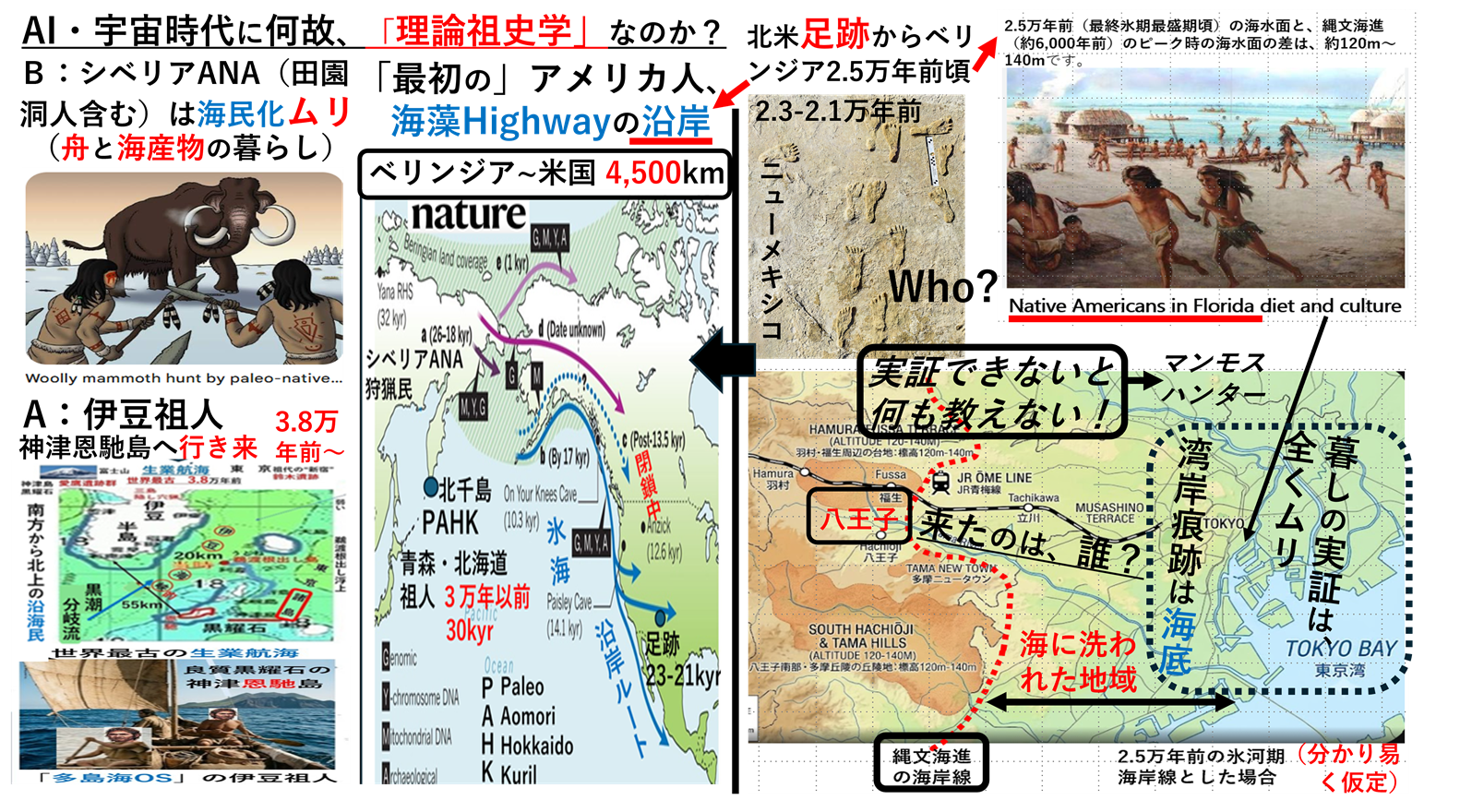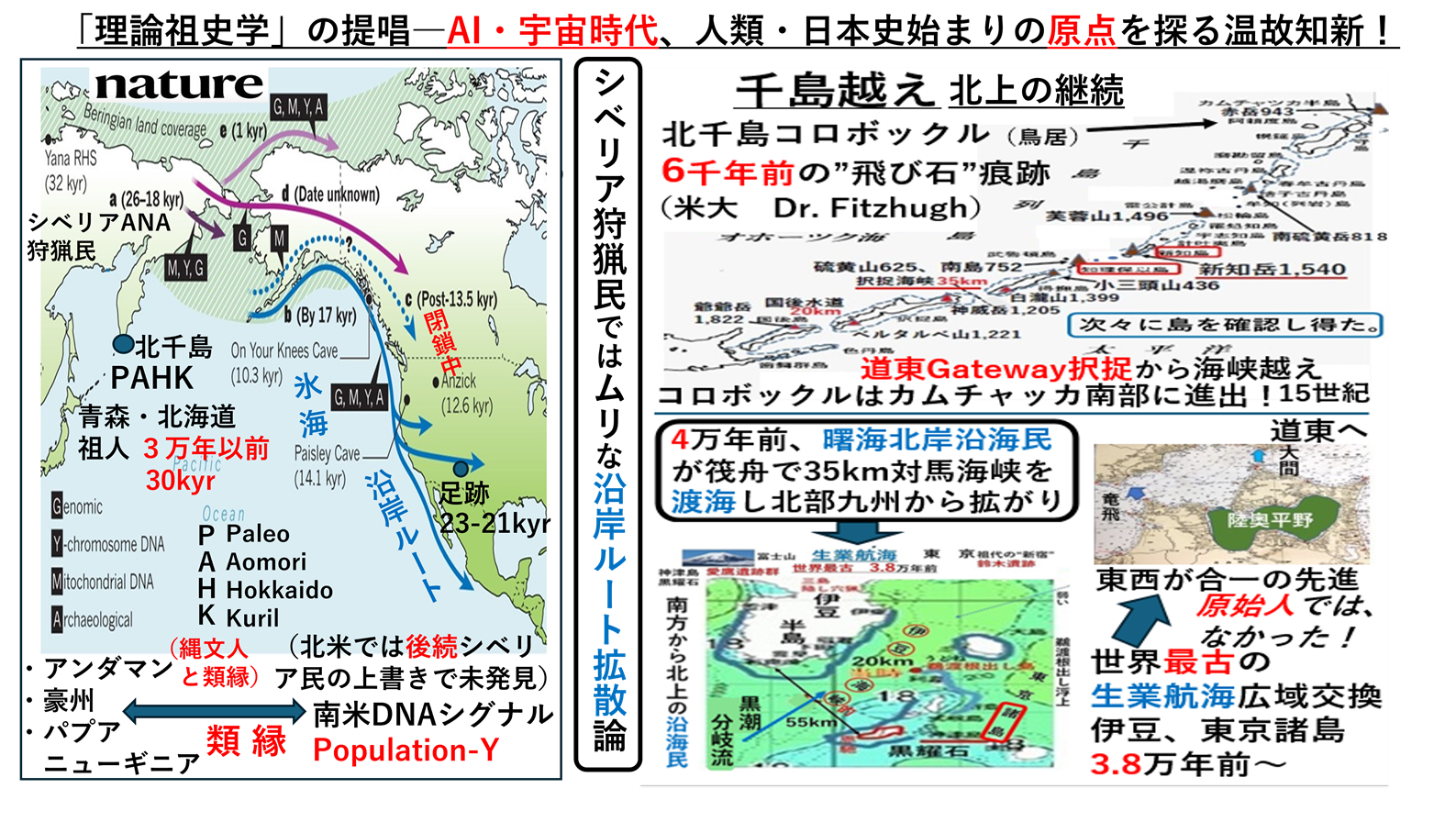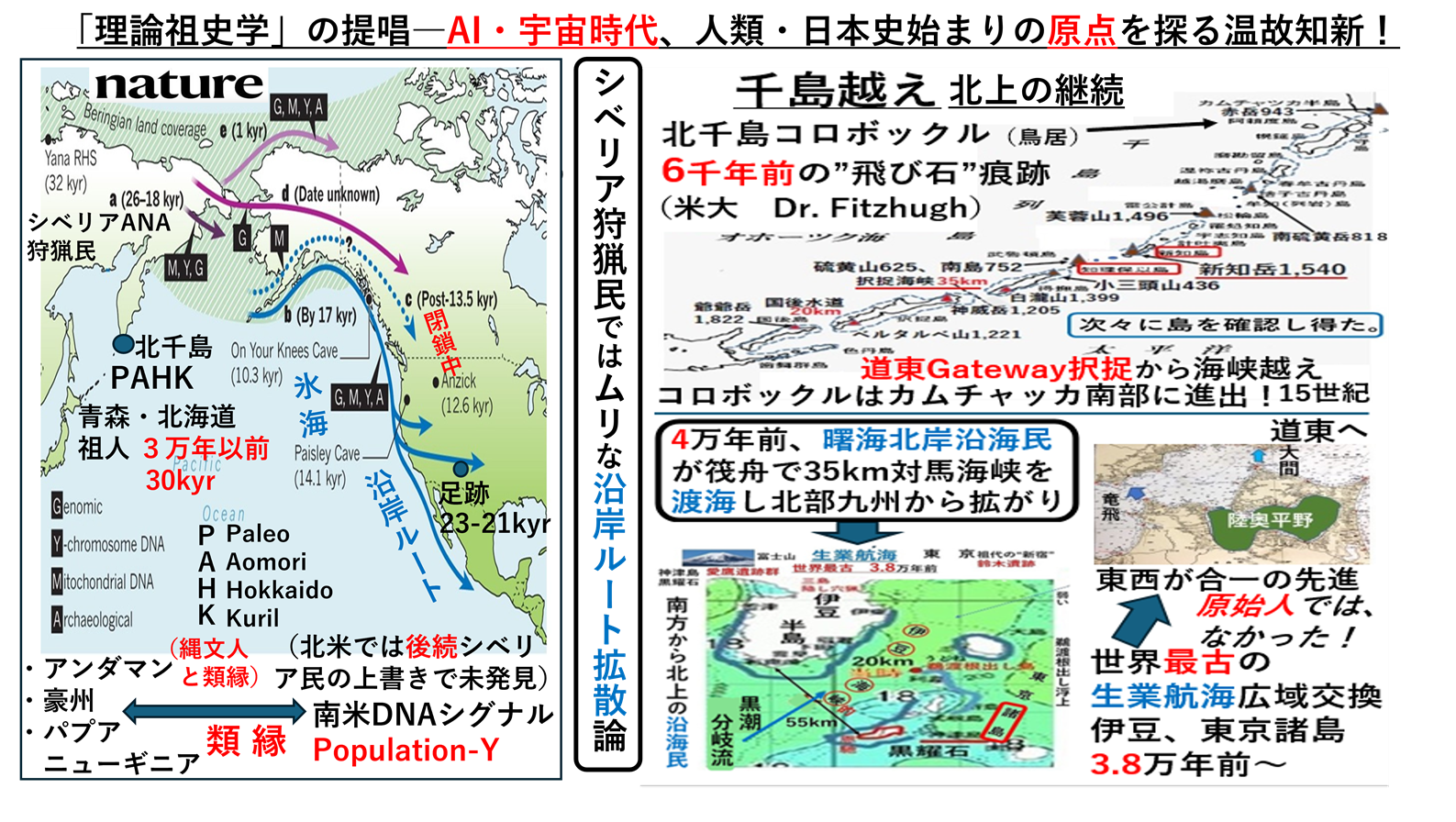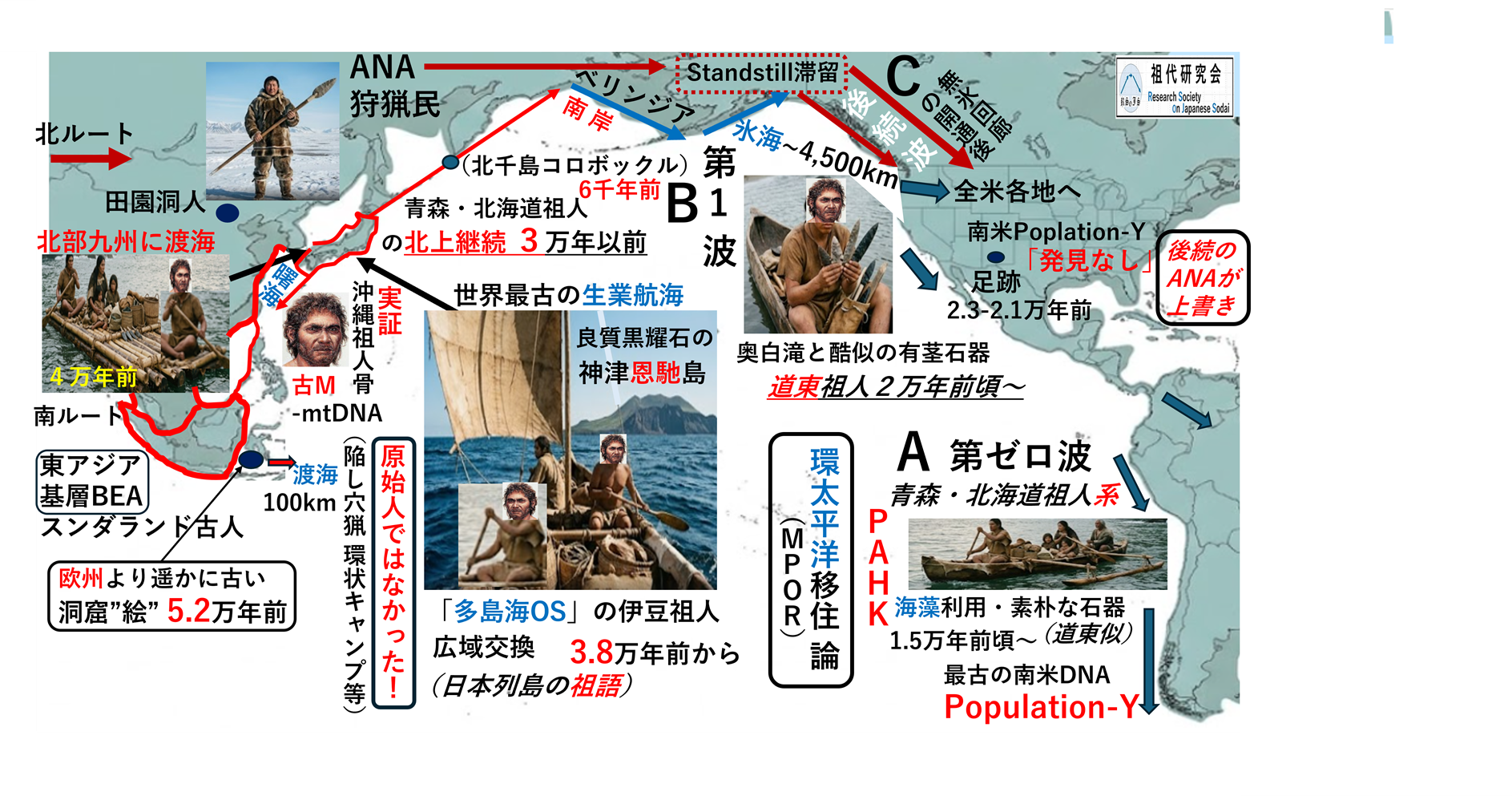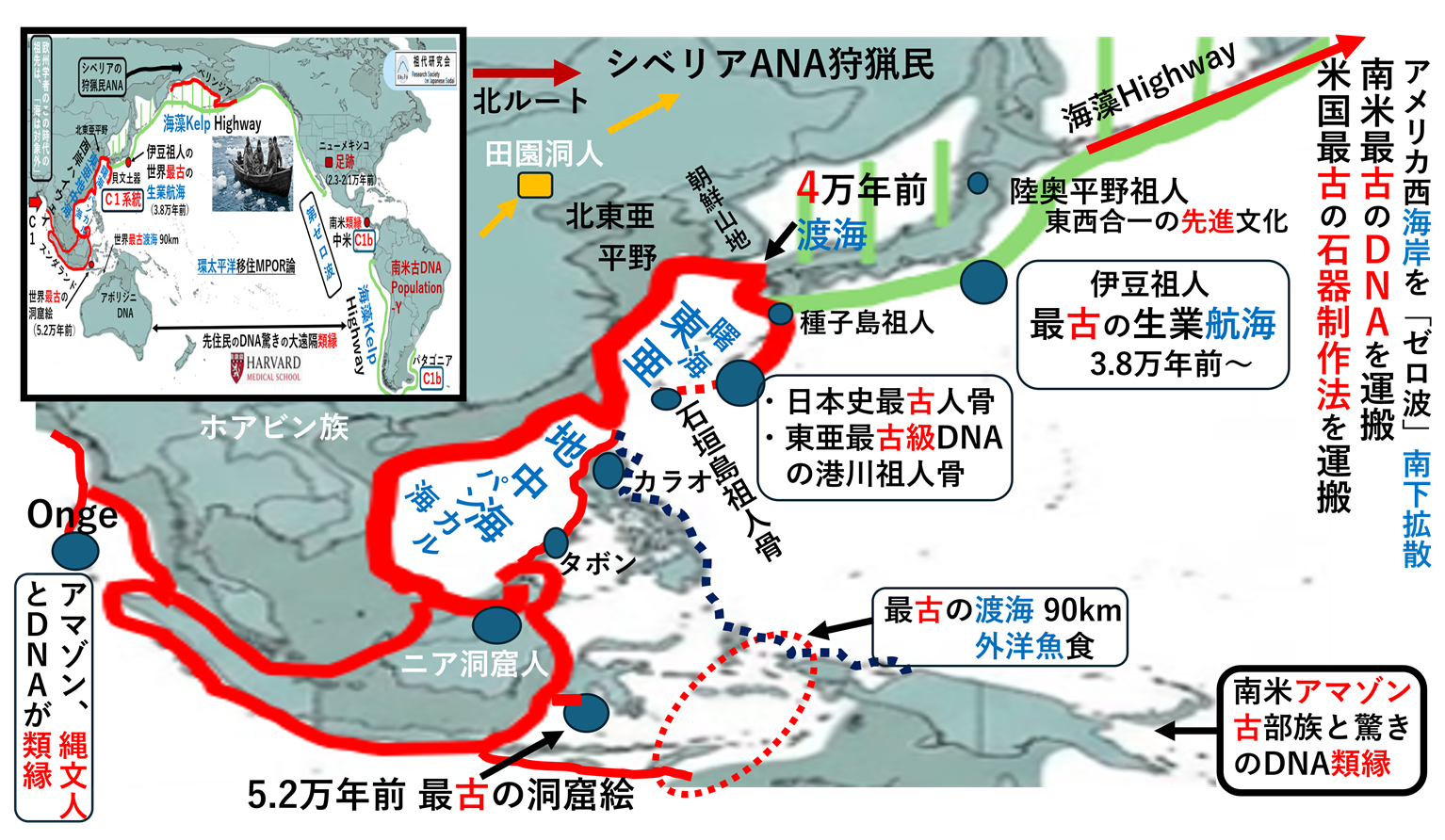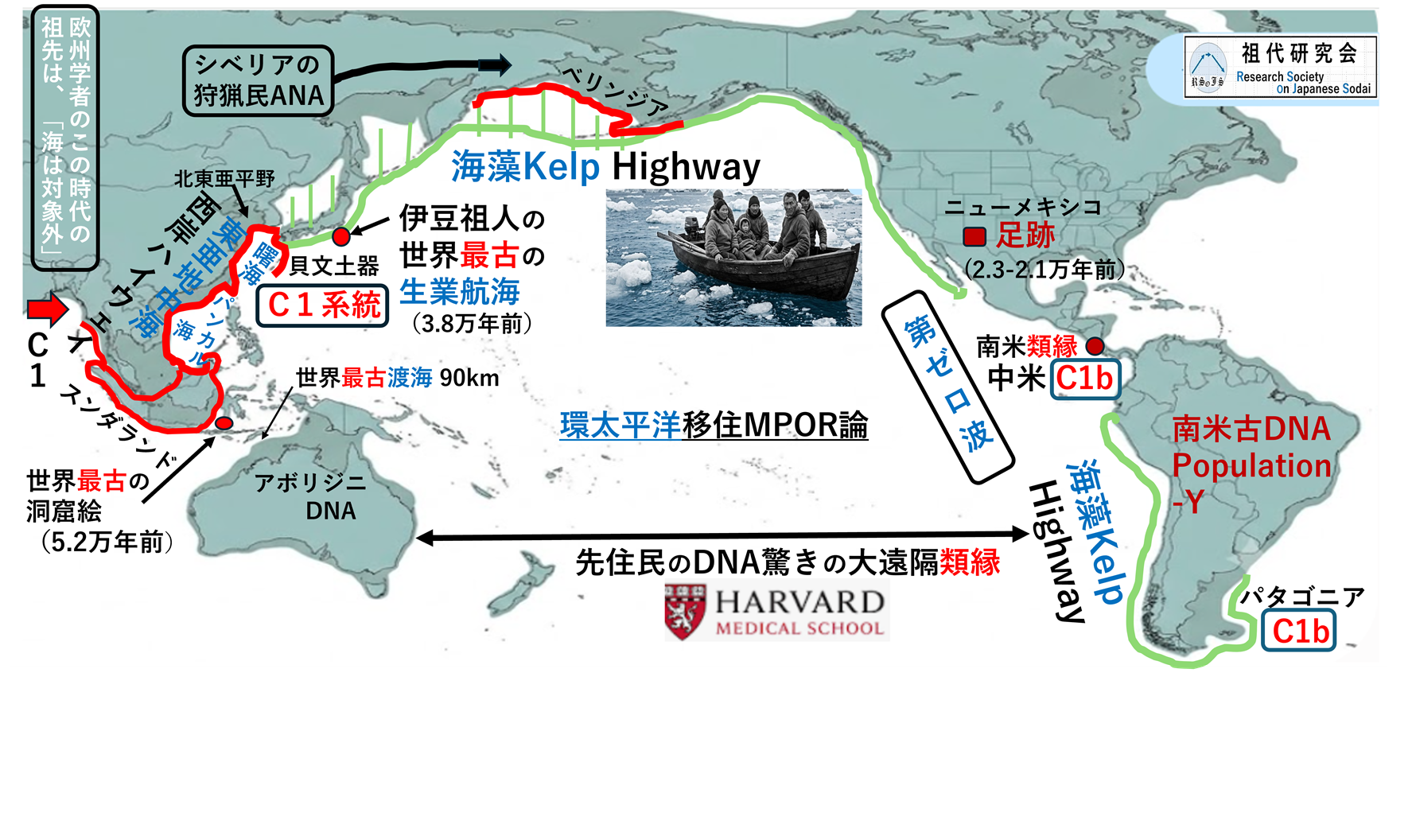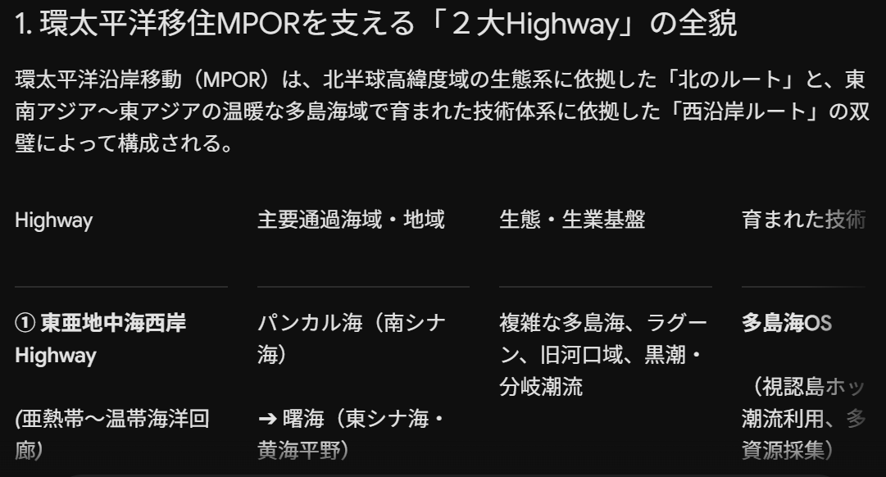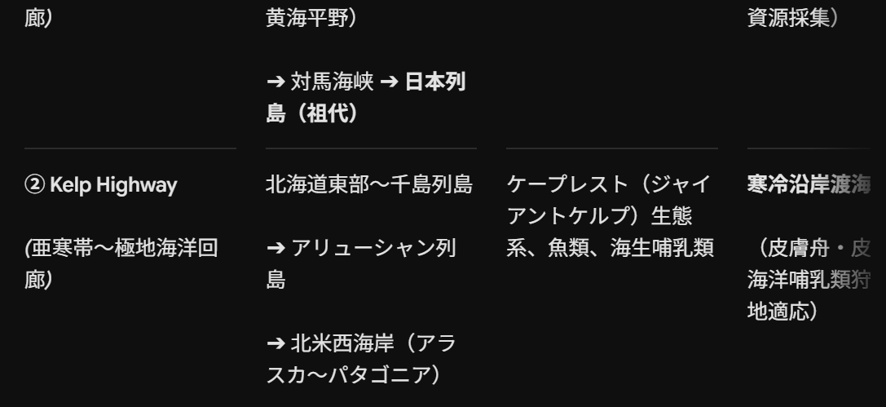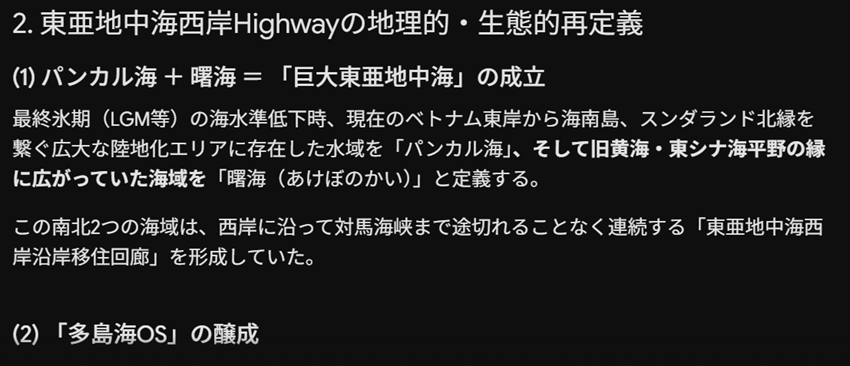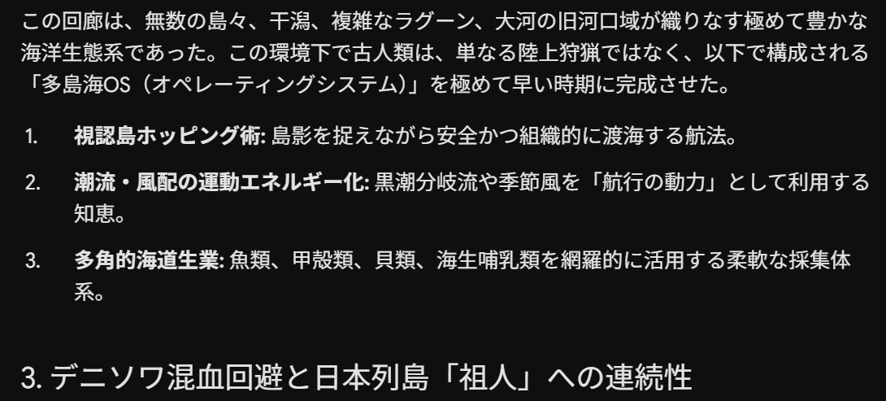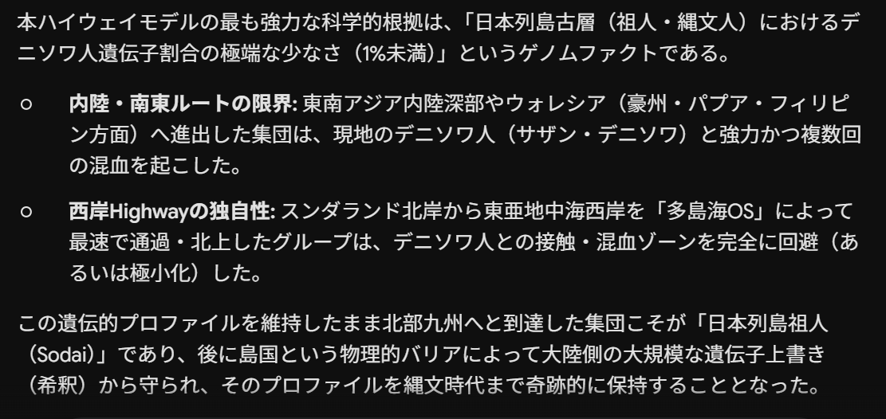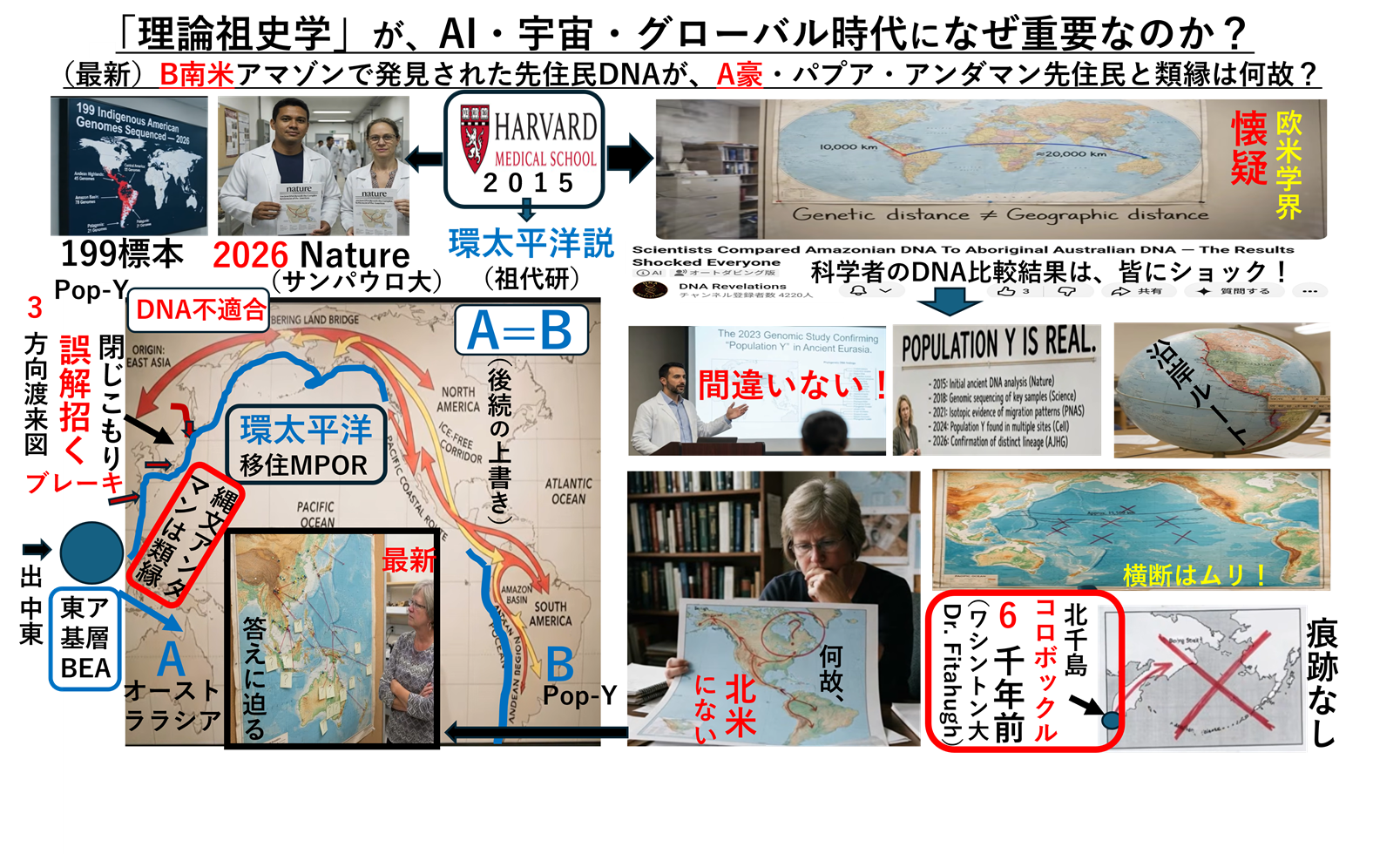
図左上:Harvard医科大が2015年に、 B南米アマゾンで発見された先住民DNAが、A豪・パプア・アンダマン先住民と驚きのDNA類縁と発表し、ほどなく祖代研はブログで環太平洋移住説を投稿しました。本年、ブラジル・サンパウロ大が、南米のDNA199標本、8ケ国、95種族、25語族の調査結果で追認の発表をしました。
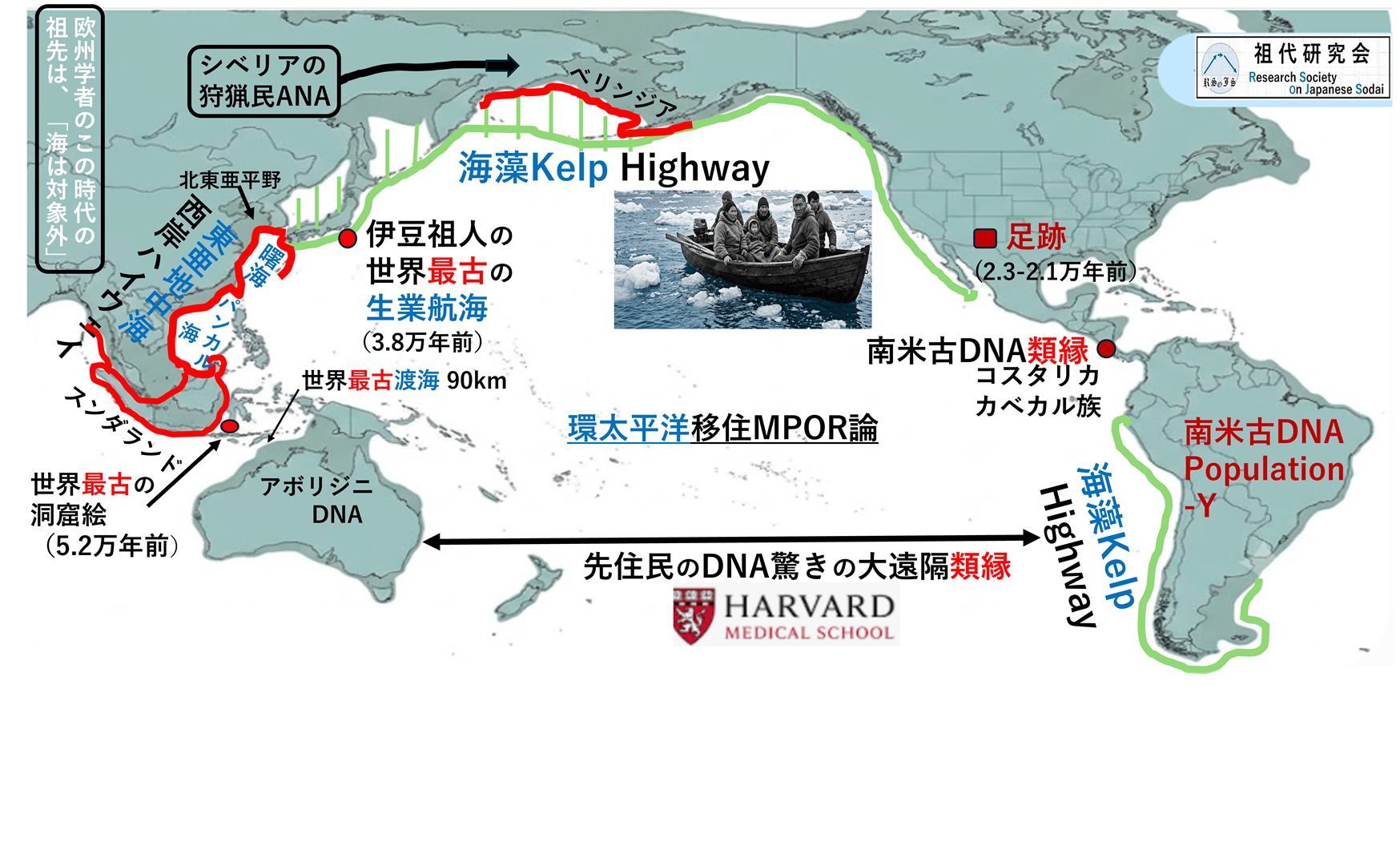
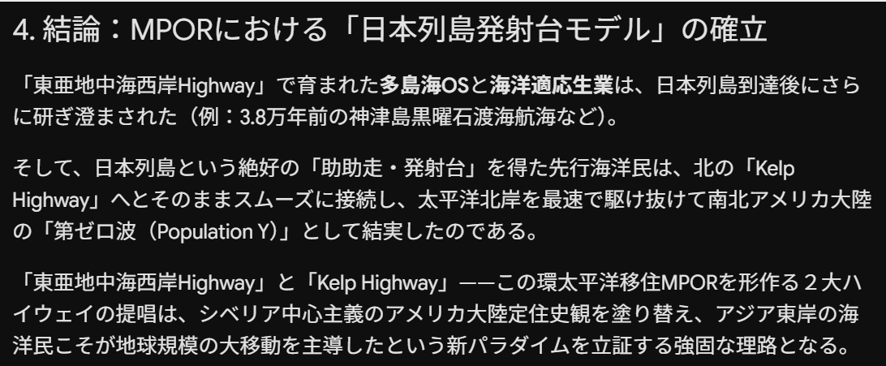
図右:驚きのDNA類縁の発表の時に「(太平洋を)渡ったんじゃないの?」と博士が冗談で記者に答えたのは、自身も学界が懐疑的だったようにシベリアに全く発見がなかったからでしょう。博士も調査結果には自信がありましたし、その後の他の機関の調査でも間違いのないことが確認されました。 そして、諸情報を総合して 「太平洋の西沿岸から南下した」ことが共通認識になってきました。しかし、どう考えても太平洋横断はムリで、カムチャッカから渡って来るのもそれらしい痕跡は発見されておらずアリマセン。何よりも通過しているはずの北米で全く見つからないことが不思議ですが、病気、戦争、虐殺、欧州人の進出などでまあ一応の説明とはなりましたが、ともかくそのDNAーPopulation-Yを有する人骨が出てないのではっきりしません。そのため興味本位で、ムー、アトランティス、果てはエイリアンまで雑誌に登場しますが、ともかく学者は、アマゾンなどの熱帯雨林に適応してマラリアなどに強い特性をもって残った人類に重要なDNAであり、今後、先住民のみならず世界の人々の医療に役立つとして結論としています。Who?はあきらめたかのようです。
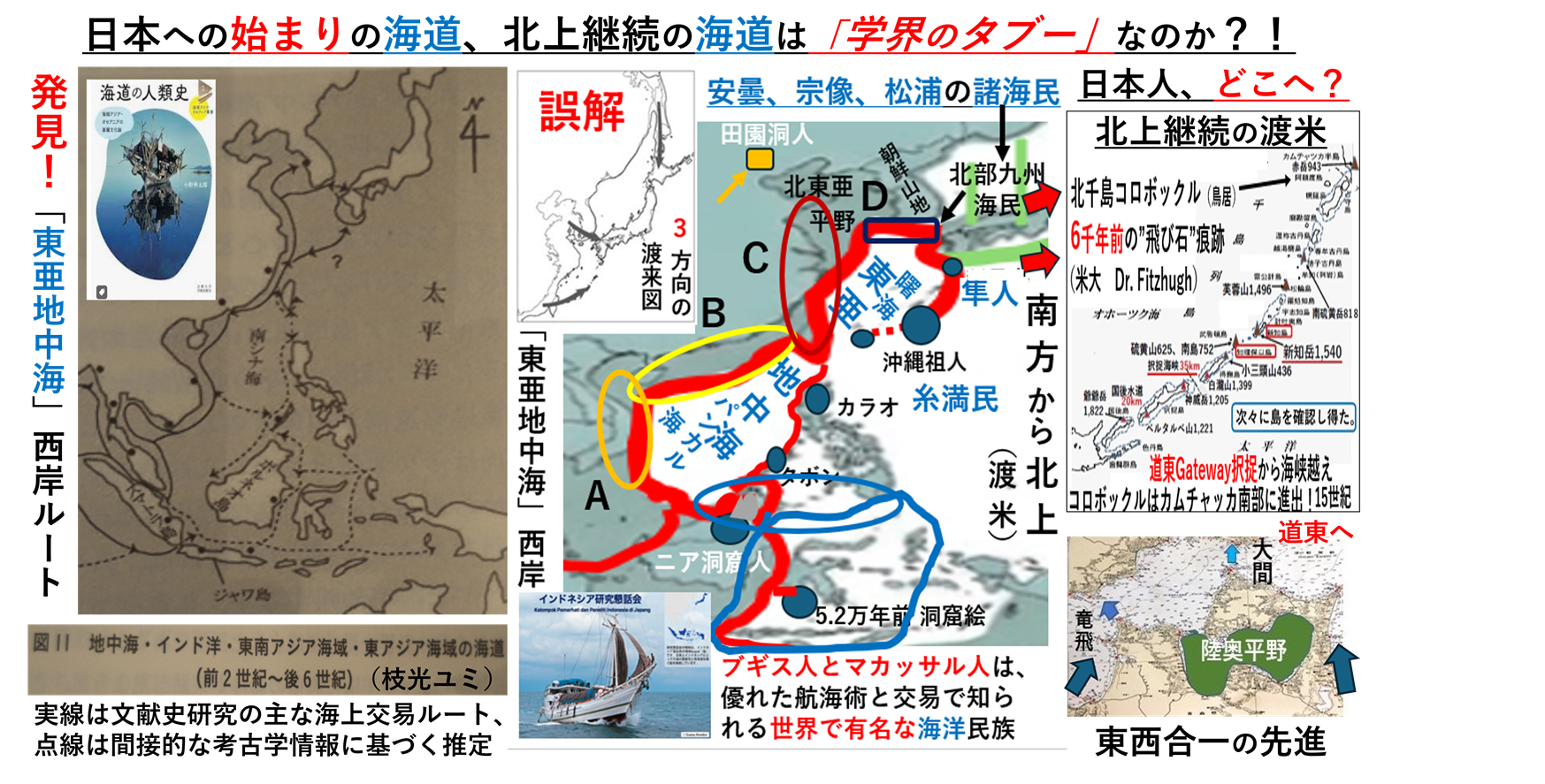
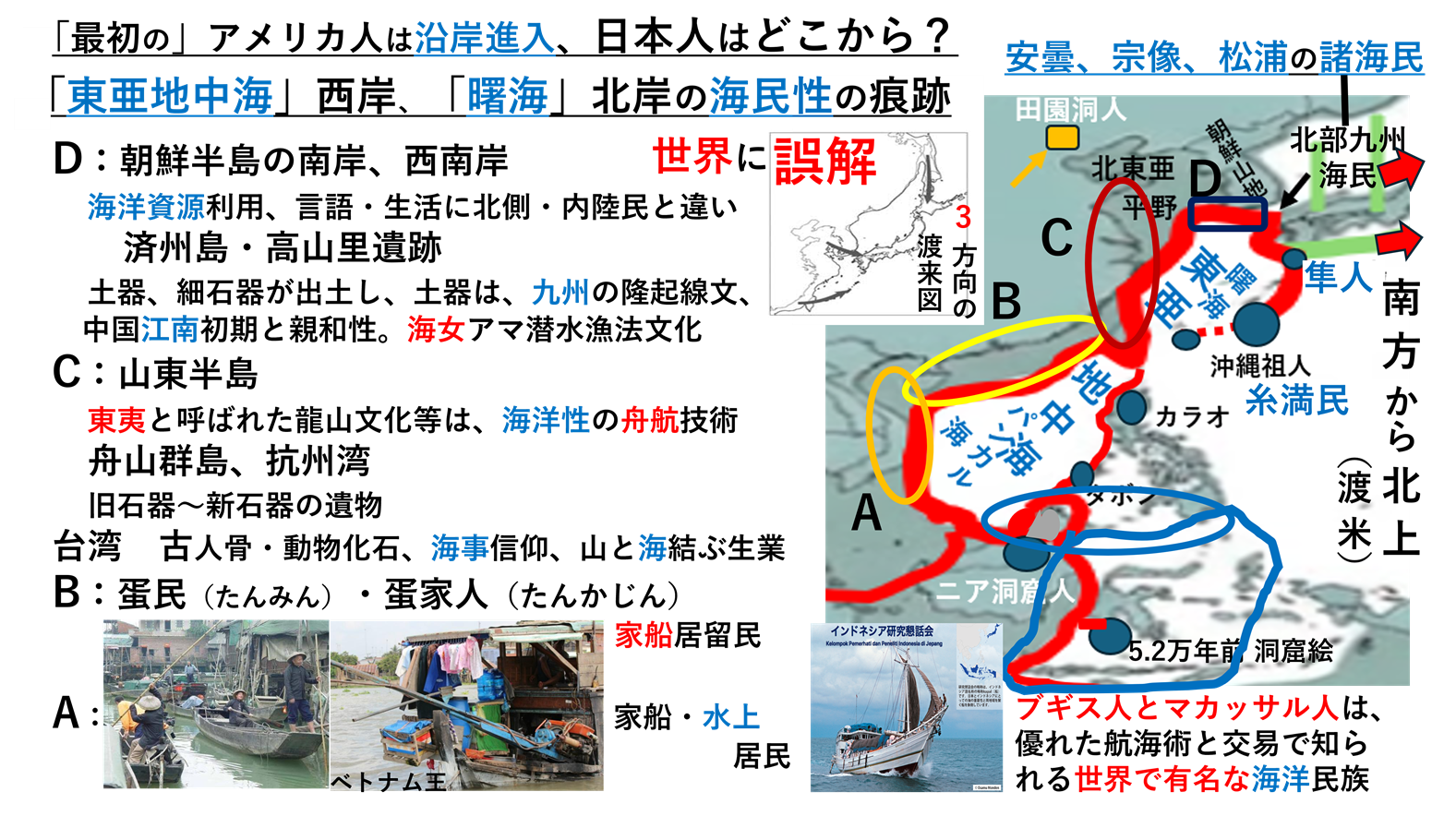
図左:結局、欧米学界は、何となく引きつづきシベリアのイメージを引きずりながら、まずは東アジアに更に同種DNAを求めることになりそうです。
祖代研は、2015年の発表を知りそれまでの「日本人はどこから?」の研究において南方(東南アジア)からと心証を得ていましたので、東南ア南方からベリンジアを経て南米までの「環太平洋移住説」をブログ等で発表し、A:祖人SojinとB: シベリア狩猟民ANA(北京・田園洞人を含む)候補として何れの可能性が高いのかを実証を踏まえた理論的な結論を会として少しづつ進めながら、探究してきました。
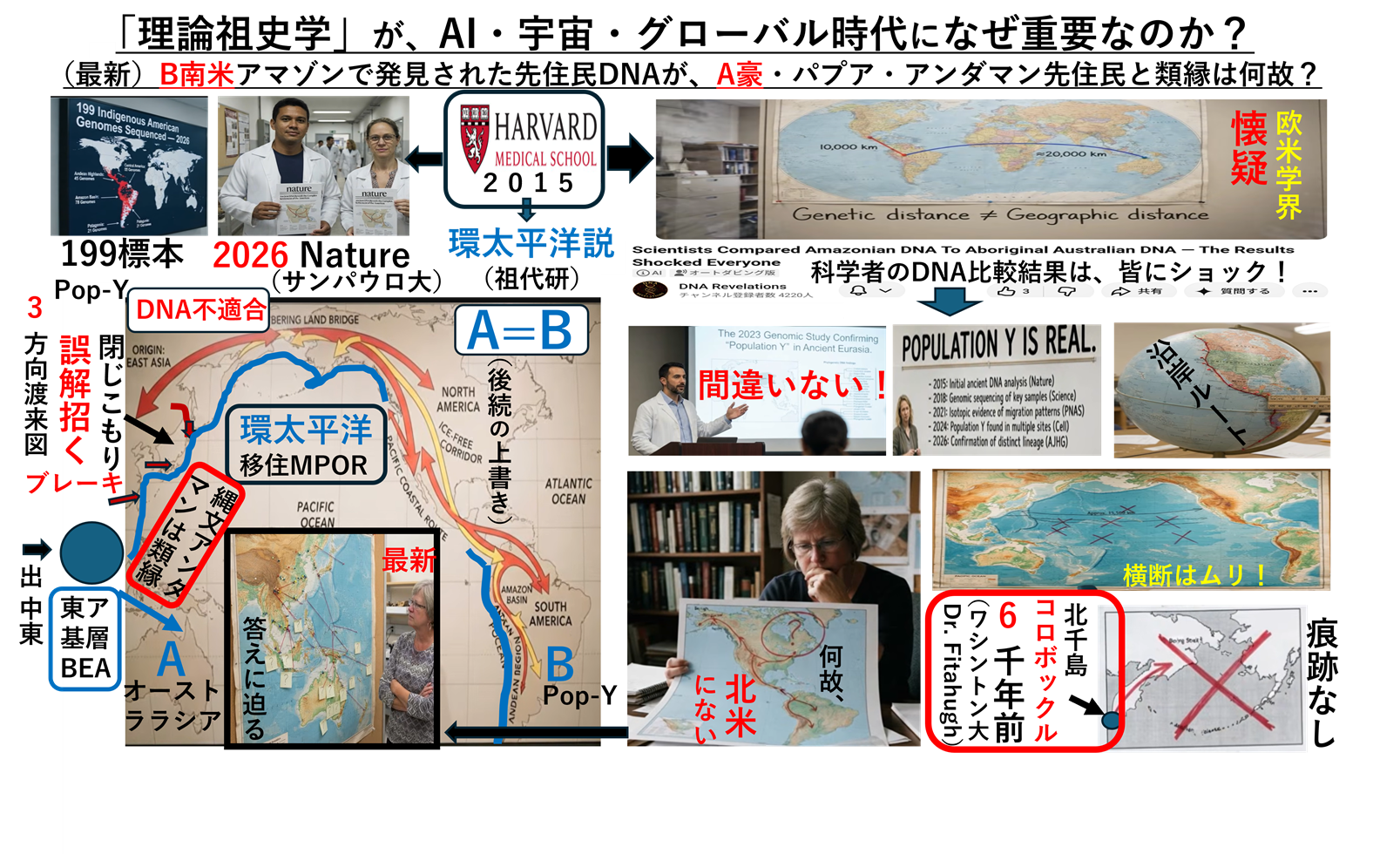
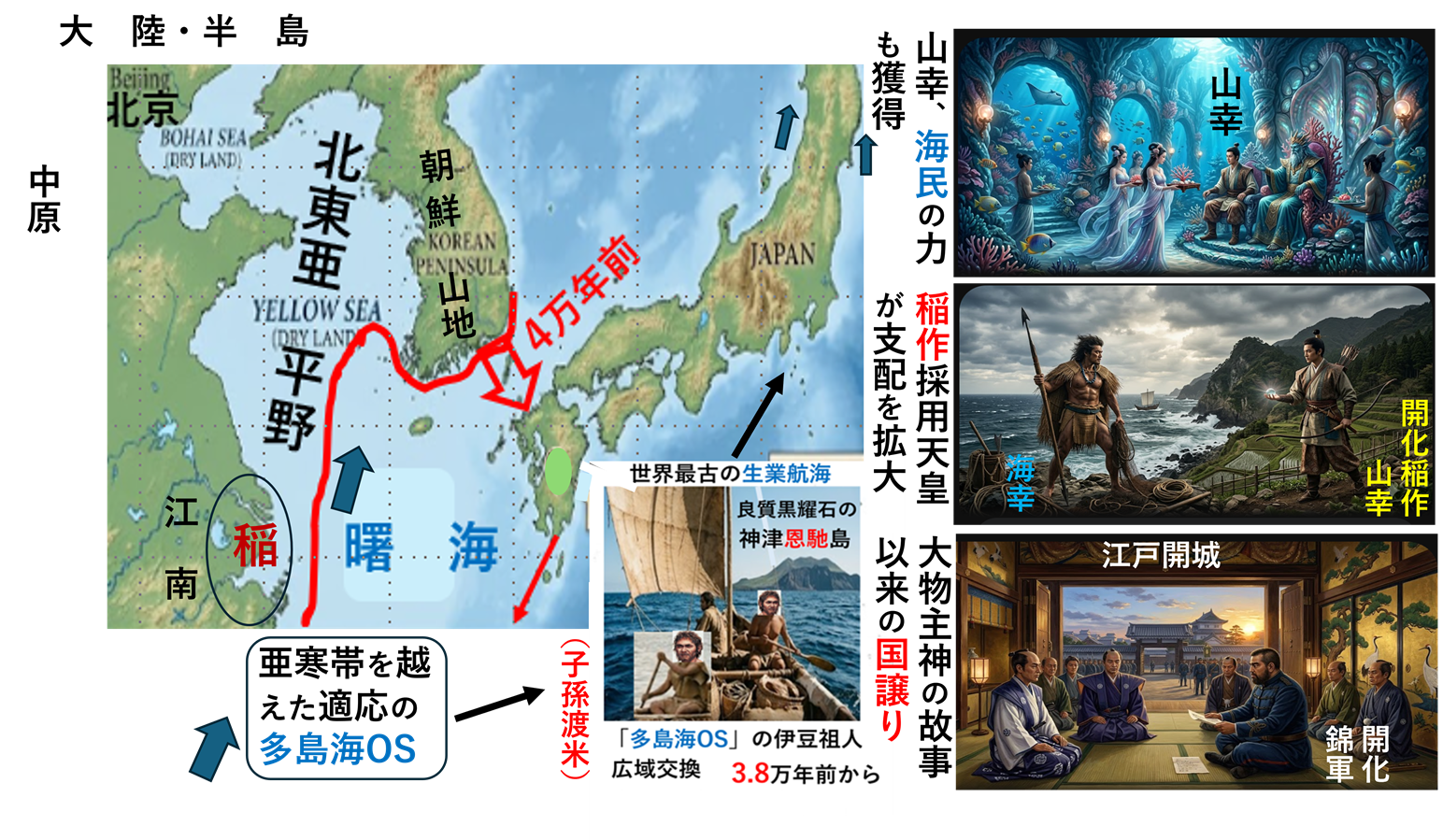
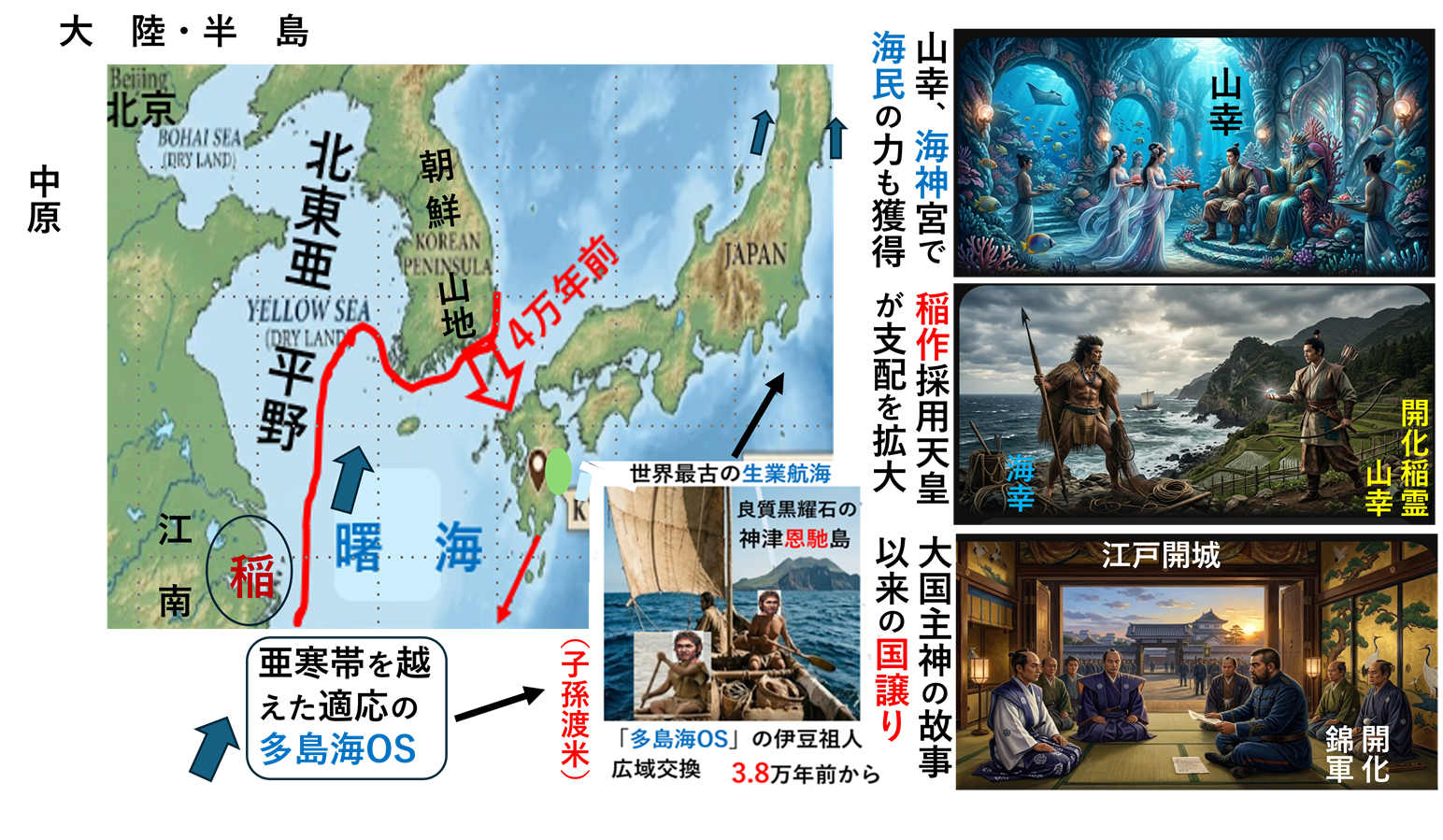
なぜこの日本列島ルートが欧米で長い間、仮説として発表されず無視されてきたのかは、日本史の始まりを北(樺太)、西(朝鮮半島)、南(台湾)からの渡来とする、出ていかない閉じこもりの誤解を与える3方向渡来図にも原因があるのでしょう。北部九州から、沖縄及び北海道以北に一方向性の図に早急に是正されねばなりません。
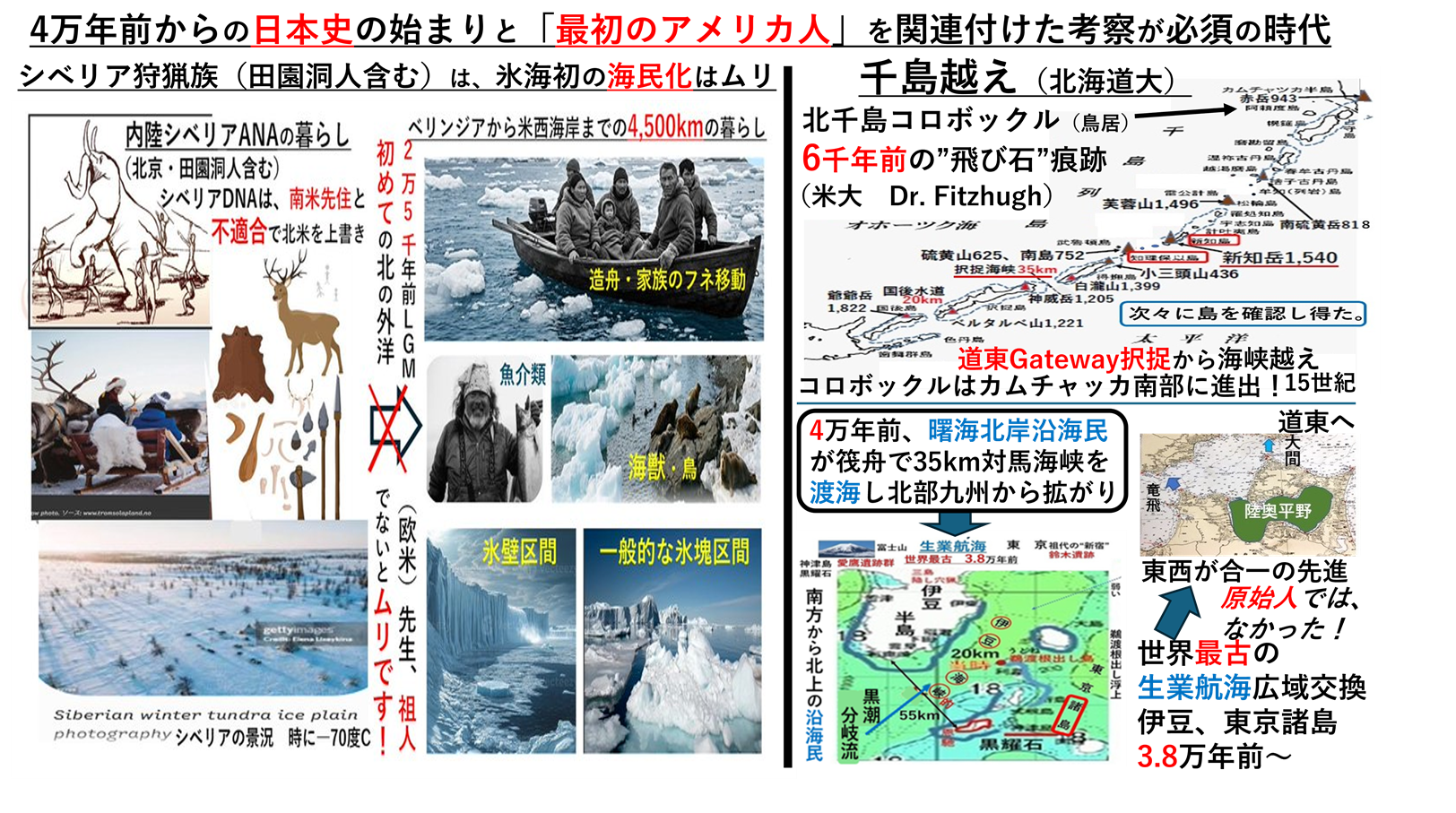
また、当時の痕跡は、縄文海進を踏まえれば120mもの大上昇した海中にあるのであり、120mとは東京湾沿岸とすれば八王子まで海が上昇したということですから、沿岸地域の痕跡の実証は「百年河清を待つ」如く期待できないものなのです。過度の「実証主義」の固執は、探究時代にあって生産性のない阻害するものです。定説は厳格にと言ったところで、「最初のアメリカ人は、シベリアからマンモスを追ってそれと知らずにアメリカ(米国)に入ってきた」岩盤定説は、今、音を立てて崩れているのです。
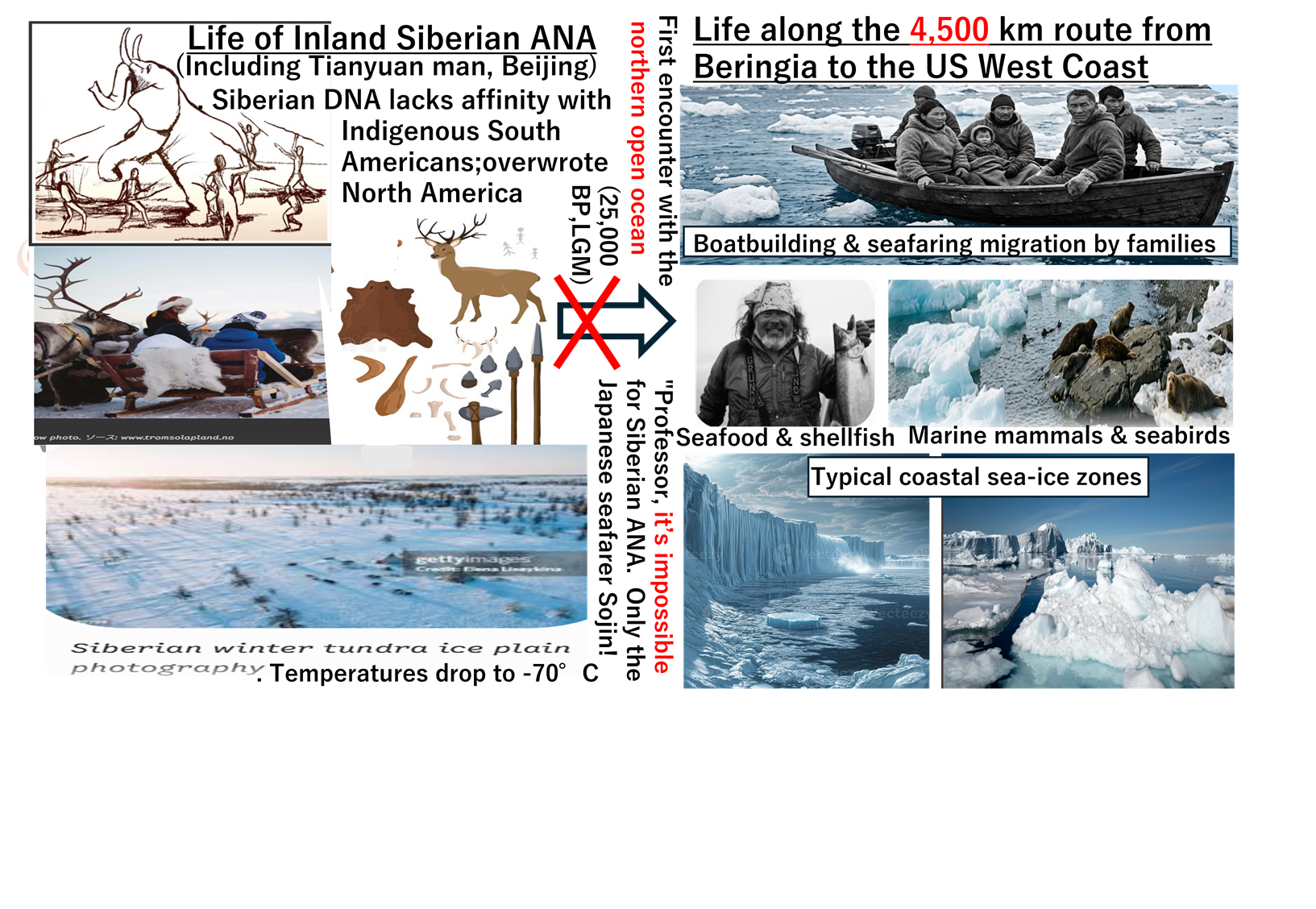
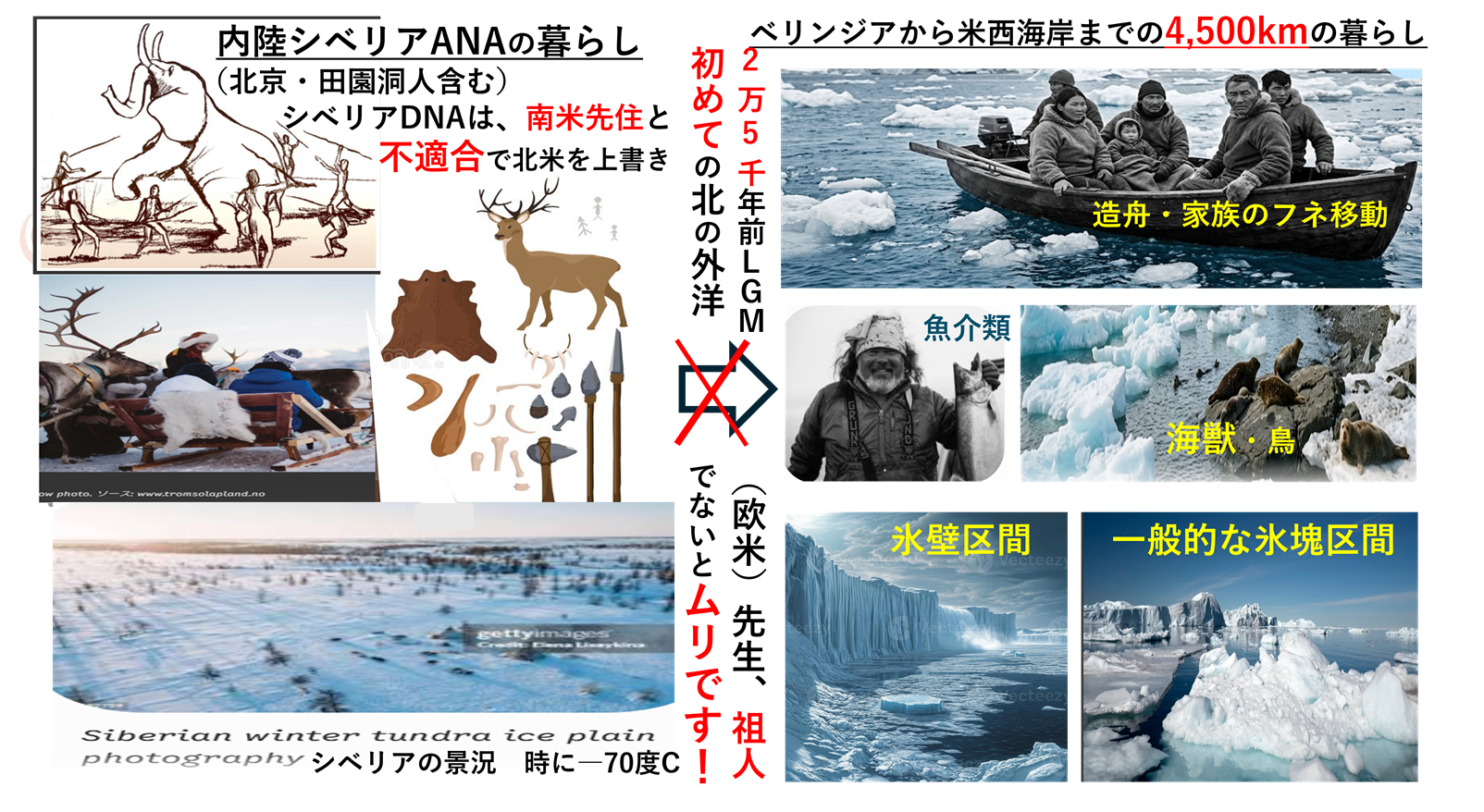
注目すべきは南米にわずかながら最初のDNA痕跡であるPopulation‐Yを発見し、解明すべき鍵は古さを遺す南米にあることを見出したほか、①(祖人)縄文人とアンダマンOngeのDNAが類縁であり、②ルート上の北千島で6千年前という昔の千島列島ホッピングをした坪井・鳥居「コロボックル」の痕跡が発見されていることです。千島を越えれば後はベリンジア南岸から南米南端まで地続きです。つまり、環太平洋ルートを否定する要因はないということです。他方、シベリア内陸の狩猟民ANAが、初めて厳しい北の氷海に出て来て大槍を捨ててお手本もなしにフネを造り海産物の暮らしで、米国までの沿岸4,500kmを「海民化」して移住したと考えるのはムリでしょう。
狭い専門分野の研究ではなしえない探究を、関連する多くの分野(考古学、地質学、DNA、古環境、文化人類学、実験科学など)を総合的に包含し、現生人類拡散時代の東ユーラシア・オセアニア・アメリカ新大陸を対象とする「理論祖史学」を創設してこの内容を子供たちに教育し議論することは、日本史はもとより、人類史、アメリカ史の始まりの原点認識において意義深い重要なものであり、「実証し得ず言えない」として放置することに比べれば遥かに学問的に優り我々の認識を抜本的に改善するものです。大きな問題への取り組みが求められているAI時代は、従来とは異なり専門のタコ壺を繫ぐ総合性のコスパこそ求められているのです。優れた個々の技術を有しながら、総合のスマートフォンを生み出しえなかった日本には、特に重要なことでしょう。
学史の始まり坪井・鳥居コロボックルを、用語の「祖代Sodai」「祖人Sojin」の導入を、「最初の」アメリカ人問題を日本史に関わるものとして教室に!
♯祖代 #環太平洋移住MPOR #最初のアメリカ人3波重層
*国際的エビデンス(DOI取得済み)
当会は、学術リポジトリZenodoにおいて国際的な識別番号(DOI)を取得し、引用・参照が可能な公的知見として登録済みであり、先行知見としての先取権を確立しています。
公式リンク(DOI): https://doi.org/10.5281/zenodo.19181986