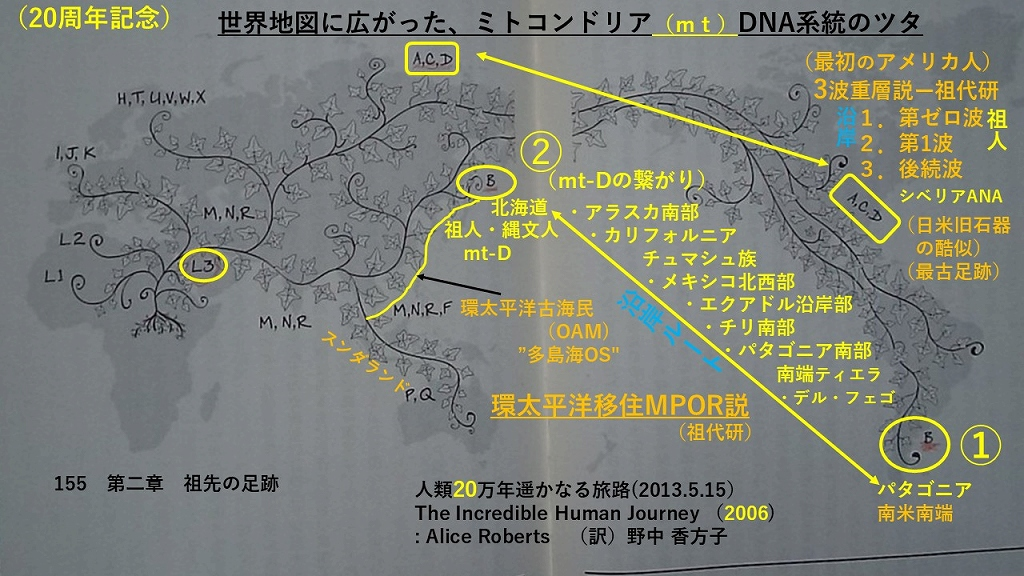
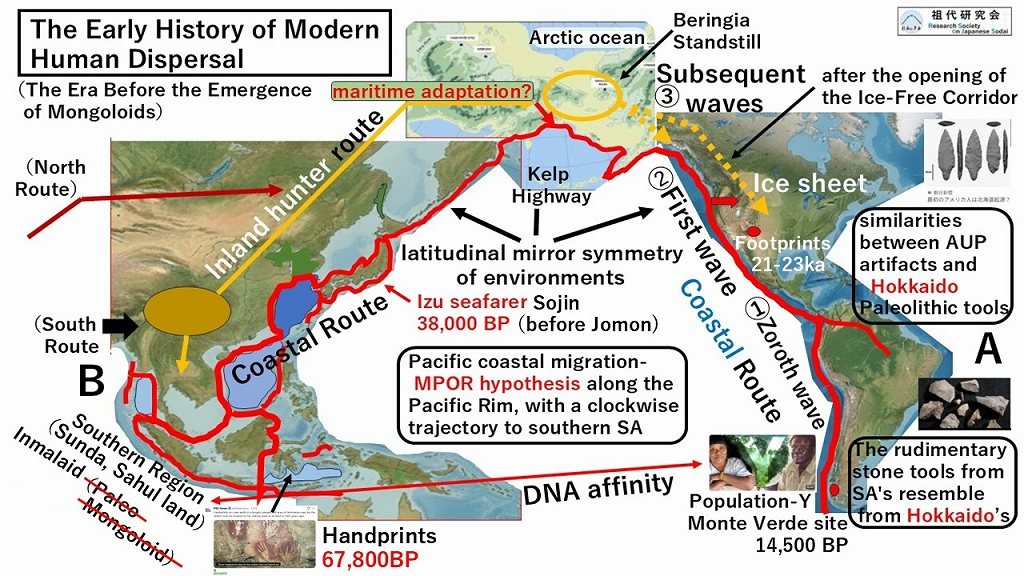
〜沈黙の発射台PAHK(P古・A青森・H北海道・K千島):欧米の「ベリンジア滞留・環境決定論」を覆す、多島海OSを有する祖人(Sojin)のベリンジア南岸における移住継続ノンストップ東進〜
発行元:祖代研究会(RSoJS)
対象:新大陸最初の人類定住(First Americans)に関する国際学術コミュニティ
【Executive Summary(要旨)】
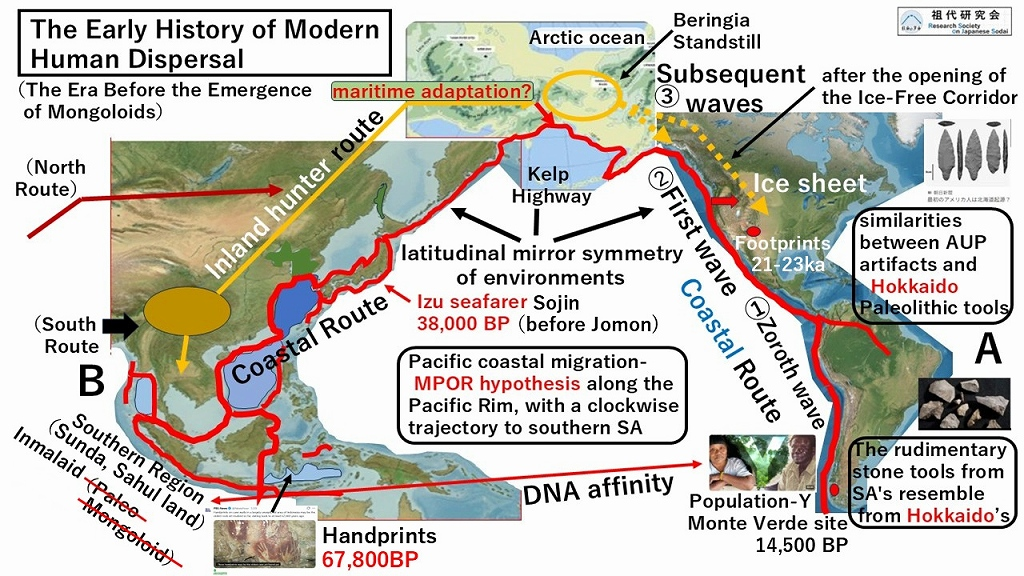
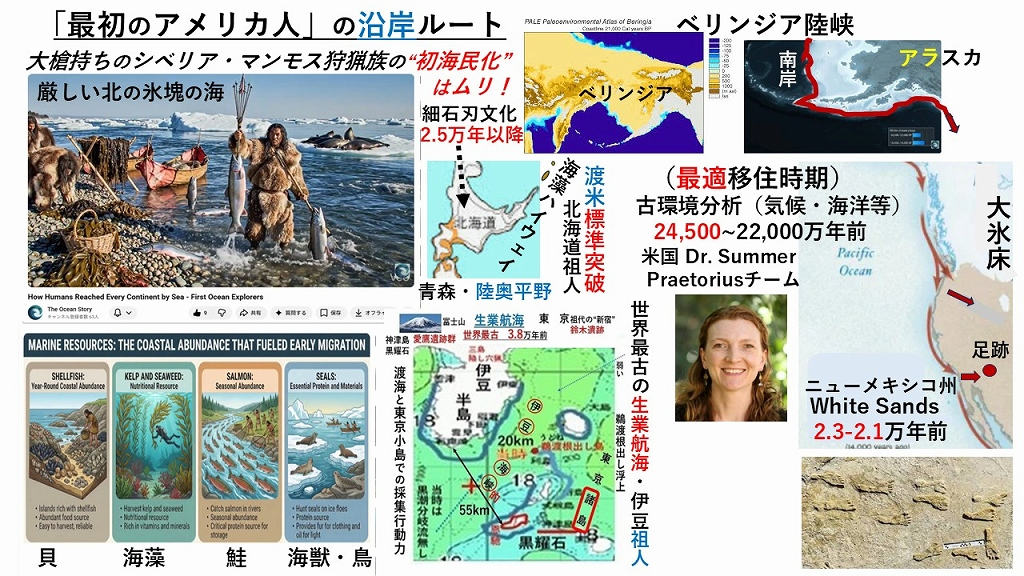
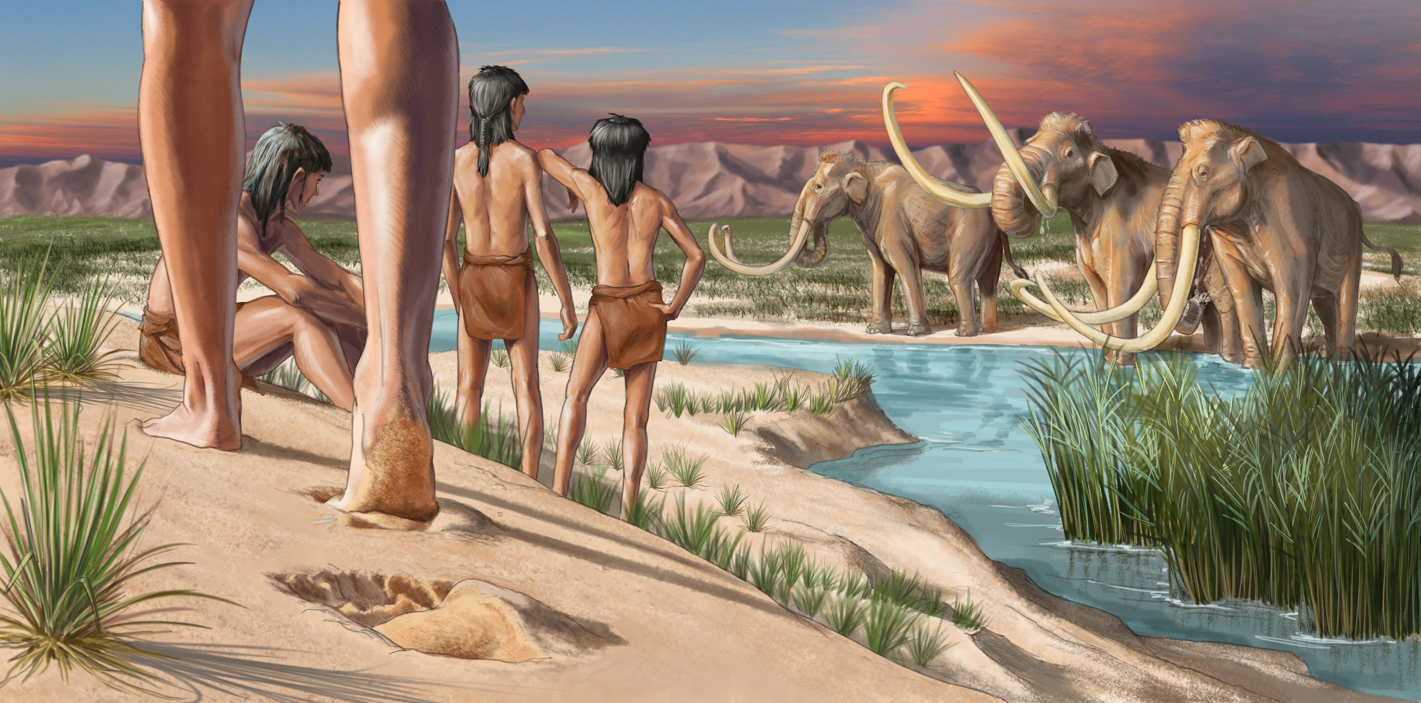
近年のニューメキシコ州ホワイトサンズにおける2.3万年前の足跡化石の年代確定は、世界の人類学・考古学界に大転換を迫っている。欧米学界が提唱する「ベリンジア滞留(Standstill)説」や「ベリンジア一過性群島のコンベアベルト(受動的移動)説」、及び「PSHK(古サハリン・北海道・千島)モデル」は、いずれも時間軸と生業(ライフスタイル)の連続性において致命的な破綻を抱えている。
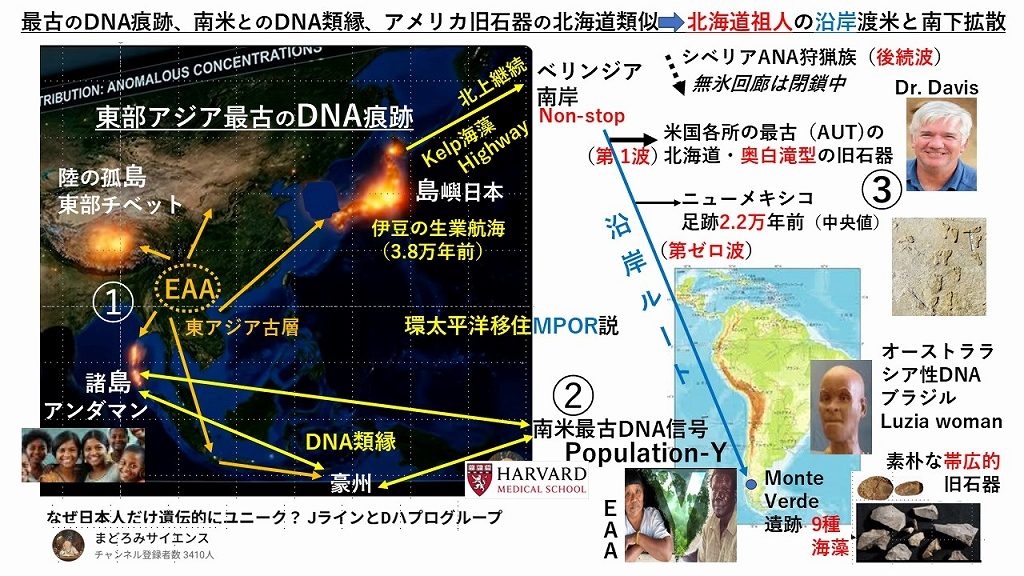
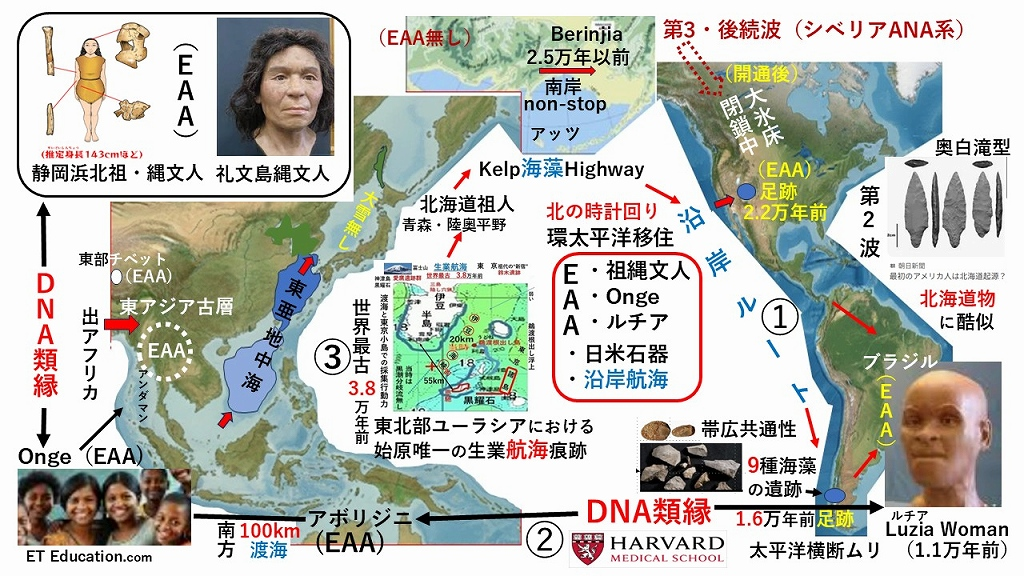
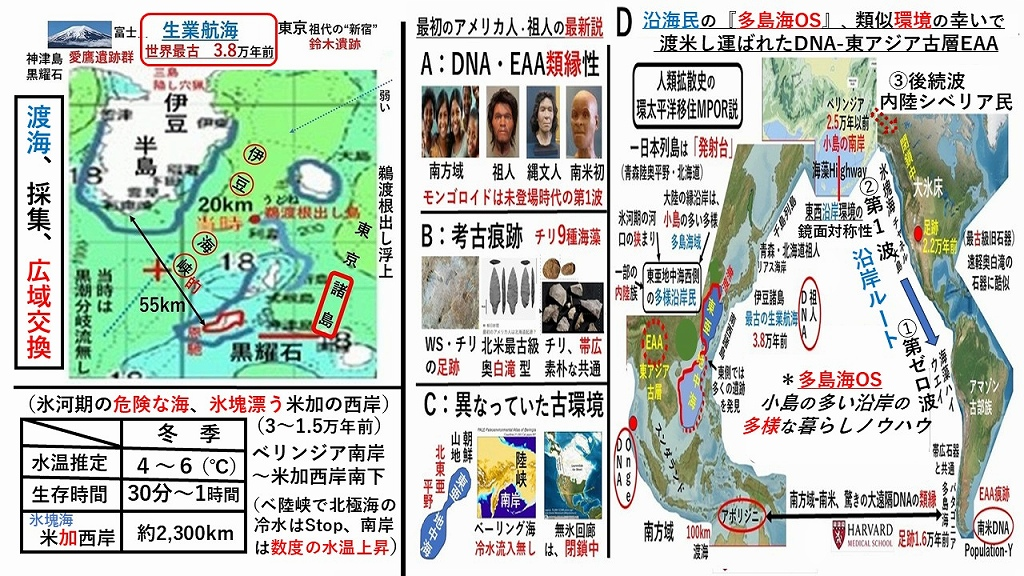
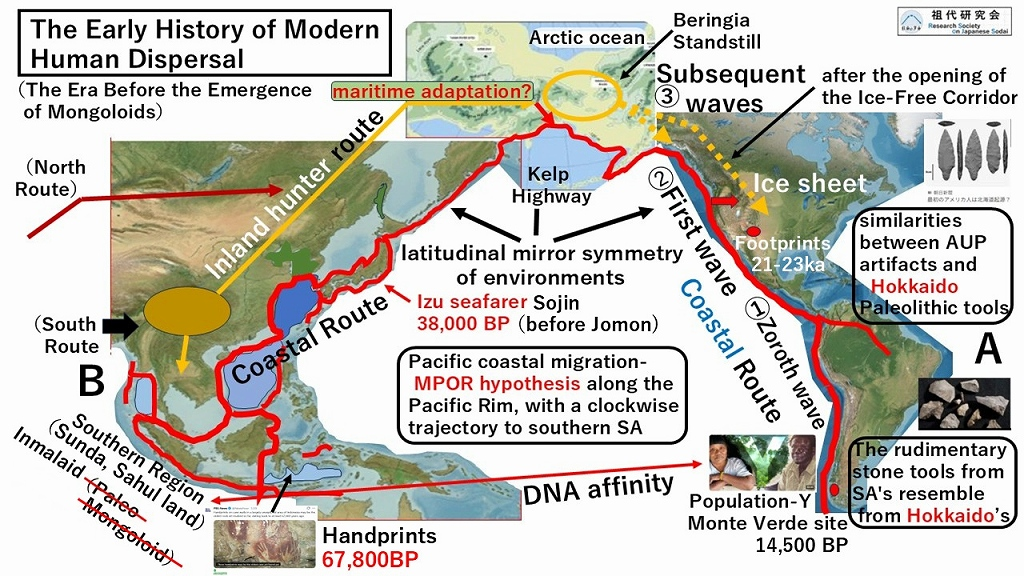
本レポートは、3.8万年前に世界最古の外洋航海を成功させた伊豆海民のDNAを受け継ぐ「先進陸奥平野〜道東の祖人(Sojin)」が、日本列島という「発射台」から千島・カムチャッカ東岸、そしてベリンジア南岸へと、それまでと同様の生業の連続性をもって【移住継続ノンストップで北上した(PAHKモデル)】とするグランドセオリーを提示し、世界学界の誤解を完全に解き明かすものである。
1. 既存モデル(欧米・日本主流派)の致命的破綻
現在、世界標準とされかけている2つのモデルは、ニューメキシコの2.3万年前という新「時間軸」の前に、いずれも論理的に崩壊している。
- PSHK(古サハリン・北海道・千島)モデルの限界: 樺太南下を起点とする細石刃文化の北海道伝播は、どれほど見積もっても2.5万年前以降(LGM期)である。2.5万年前に北海道に到達したばかりの集団が、千島・カムチャッカ・ベリンジアを越え、数千キロの過酷なルートを移動して2.3万年前までにニューメキシコ(アメリカ南部)へ達することは、物理的・時間計算timeline上、絶対に不可能である。
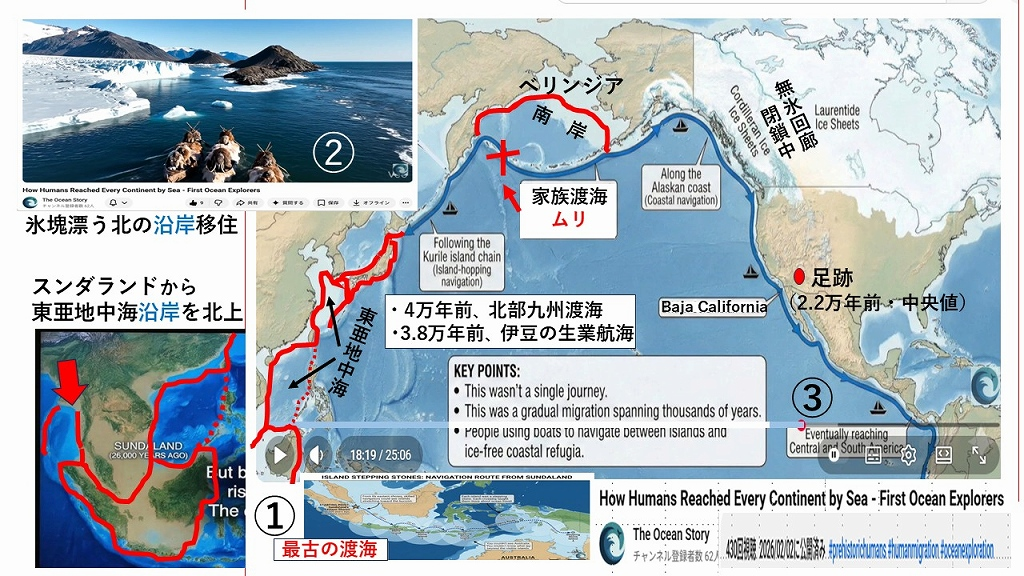
- 欧米の「一過性群島(コンベアベルト)モデル」の限界: J.F. Hoffeckerらが提唱する、海水面変動で現れたベリンジア南岸の小島を島づたいに進んだとする説。これは内陸狩猟民パラダイム(ANA系偏重)に縛られた「受動的な環境決定論」である。「島が現れたから移動できた」という受動的な人類観では、それ以前の数千年間、彼らがどこでどのように外洋航海技術を培い沿岸移住し得たのか、その技術的連続性を説明できない。
2. 祖代研が提示する「PAHK」グランドセオリー
これら全ての矛盾を排し、タイムラインと生業のリアリティを証明するのが、祖代研の提唱する【PAHK】モデルである。
【祖代研・移住継続ノンストップ東進のタイムライン】
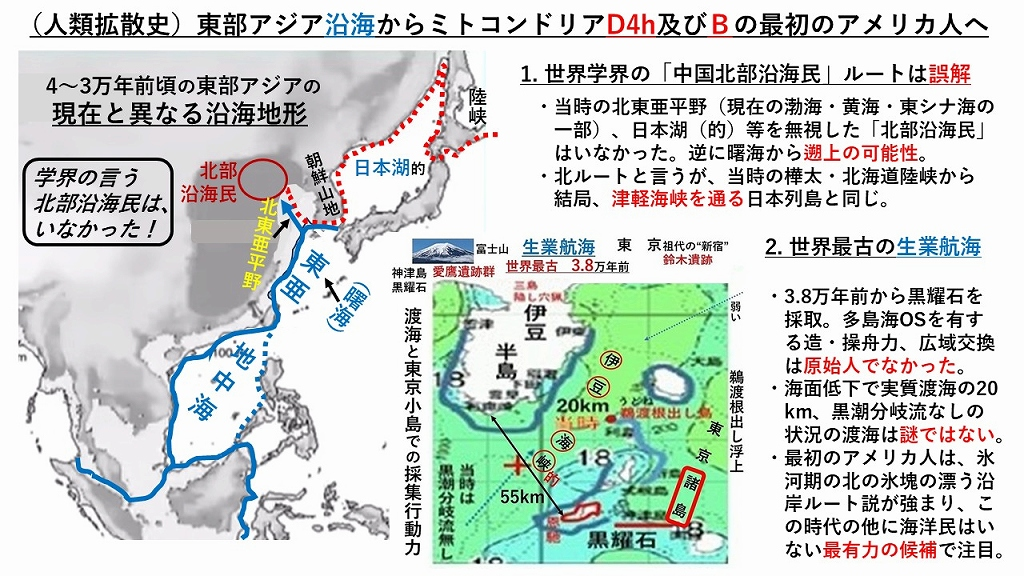
3.8万年前〜 :「伊豆生業航海」の確立(潮流と島影を計算する世界最古の外洋支配)
↓
3.5万年前頃 :「先進陸奥平野(PA青森HK)」が基盤となり、東西の北上ルートが合体し渡道
↓
3.5-3万年前頃 :「道東ゲートウェイ」から、卓越した海洋民(祖人-Sojin-)が北上開始
↓
2.5万年前頃 :千島列島・カムチャッカ東岸を北上継続、ベリンジア南岸へ進入【ノンストップ】で移住
↓
2.3万年前 :北米西海岸(沿岸ルート)を経て、ニューメキシコへ到達(ホワイトサンズ足跡)
【核心】「動く島」ではなく「日常の連続」
祖代の先行海洋民(OAM)である祖人にとって、ベリンジア南岸の環境や小島群は、特殊な足止め(滞留)の場所ではない。彼らにとっては、それまで渡ってきた千島列島やカムチャッカ東岸の延長線上にある「いつも通りの日常の沿岸」に過ぎなかった。 舟を持ち、潮流を読み、豊かな海洋資源(海獣・藻場)を追う生業が3.8万年前の時点で完成していたからこそ、彼らは足止めを食らうことなく、能動的な意志と卓越した技術をもってベリンジア南岸をノンストップで東進(移住継続)して行ったのである。
3. 世界学界へ与えるパラダイムシフト
本レポートがもたらす結論は、ファースト・アメリカンズ論争に終止符を打つインパクトを持つ。
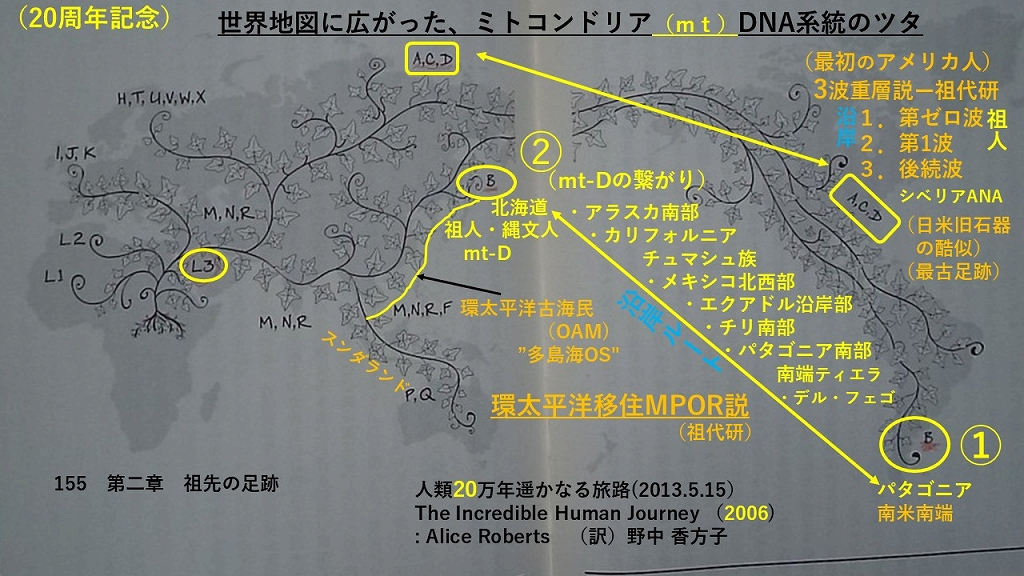
- 「最初のアメリカ人」の生誕地は日本列島である。 縄文(1.65万年前〜)は時代的に全く対象外であり、4万年前から日本列島に存在した始まり「祖代(Sodai)」の海洋性民「祖人Sojin」こそが真の主役である。
- 受動的環境論から能動的生業論への転換。 気候変動や島の出現といった地球環境の偶然に人類が流されたのではない。「進む技術と意志と多島海OSを持った民が、目の前の沿岸をいつも通りに移住して行った結果、そこが新大陸だった」という、人間の能動性を中心に据えた真の人類史への回帰を促す。
【結語】 日本学界の沈黙によって、世界学界は「依然として狩猟系ANA系偏重」と「PSHKのタイムライン不整合」という霧の中に迷い込んでいる。本「PAHK移住継続ノンストップ東進モデル」こそが、その霧を晴らし、ニューメキシコの物証と人類移住の足跡をピタリと一致させる可能性を有する唯一の鍵である。この日本列島という「沈黙の発射台」の真実を、今後も世界へ向けて発信し続ける。
*国際的エビデンス(DOI取得済み)
当会は、学術リポジトリZenodoにおいて国際的な識別番号(DOI)を取得し、引用・参照が可能な公的知見として登録済みであり、先行知見としての先取権を確立しています。
公式リンク(DOI): https://doi.org/10.5281/zenodo.19181986
 sunda-wind.net2. DNA and Artifact Links Supporting Coastal Dispersal