
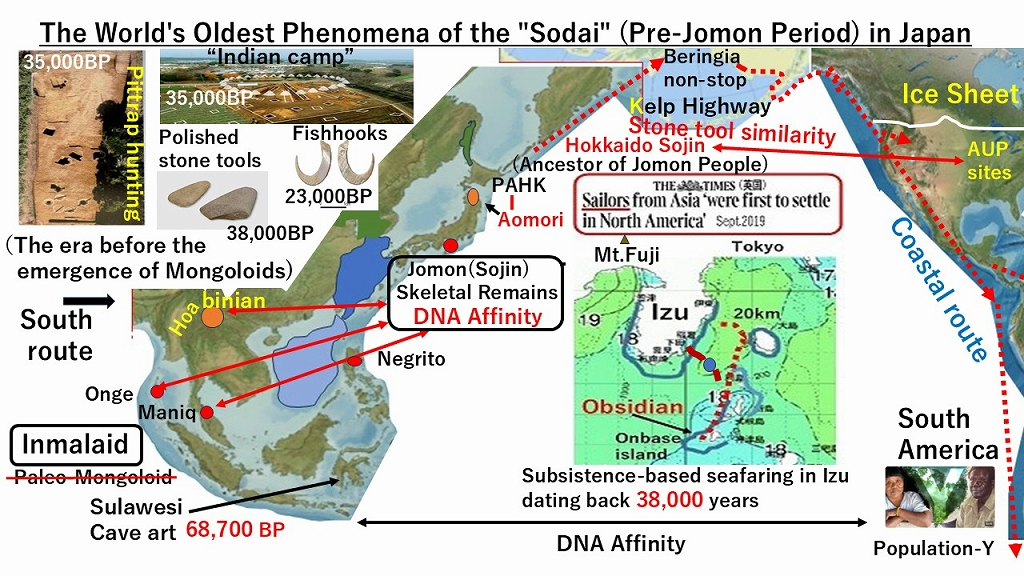
1. Maritime Subsistence and Intelligence (38,000 years ago) The Sojin (Pre-Jomon) engaged in seafaring voyages to remote islands in the Izu region in search of obsidian. This demonstrates the advanced intelligence required for boat building and navigation.
2. Pit-Trap Hunting (35,000 years ago) The use of pit traps reflects high cognitive ability in strategic placement and the physical labor required for excavation without metal tools, suggesting a structured social organization.
3. Social and Spiritual Life (35,000 years ago) Their campsite structures indicate a social and spiritual framework akin to that of Native American cultures.
4. Pioneering Lithic Technology The Sojin utilized “polished” (ground) stone tools approximately 20,000 years earlier than the western world.
5. World’s Oldest Fishing Hooks (23,000 years ago) Evidence shows they were the first to catch fish using hooks, marking the earliest known traces of this technology.
(Conclusion) With the discovery of Australasian DNA (Population-Y) in South America, it is now theorized that the First Americans migrated south along the western coast of the New World. Consequently, the seafaring Hokkaido Sojin have gained significant attention. Their DNA shows affinities with the southern Inmalaid people, leading to the “Pacific Rim Migration Theory.”
—RSoJS